Videos Hacker News keeps recommending, with honest titles.
Invite only: friends here see what each other watch.
Classics

Why it's here
HN recommends it as the best readily available interview with Simons, notable for his emphasis on luck and a humble approach to success.
The full-length Numberphile interview with mathematician and hedge fund founder Jim Simons. He discusses his path from mathematics and codebreaking to founding Renaissance Technologies, his use of algorithms in markets, and his philanthropy.
Jim Simons on Mathematics, Renaissance Technologies and Luck
Numberphile2 · Interview
HN recommends it as the best readily available interview with Simons, notable for his emphasis on luck and a humble approach to success.
Why it's here
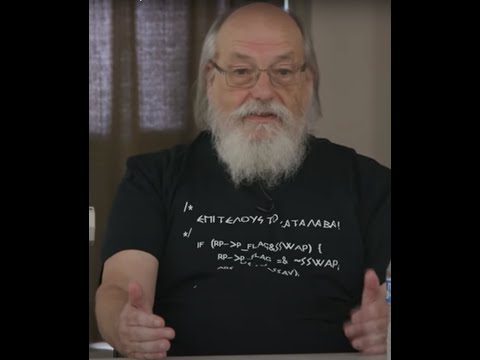
HN commenters recommend it for Thompson's funny, first-hand Unix history stories, some of which even Kernighan had not heard.
Brian Kernighan interviews Unix co-creator Ken Thompson at VCF East 2019. Thompson recounts how he was hired at Bell Labs, writing the Unix kernel in about three weeks, the origins of B and TMG, pipes, and other anecdotes.
Ken Thompson on Unix's Origins, with Brian Kernighan
Vintage Computer Federation · Interview
HN commenters recommend it for Thompson's funny, first-hand Unix history stories, some of which even Kernighan had not heard.

Why it's here
It is one of the most frequently recommended videos on HN for old-school game development hacks under tight hardware constraints.
In Ars Technica's War Stories, Naughty Dog co-founder Andy Gavin explains how the team squeezed Crash Bandicoot onto the original PlayStation. They overwrote Sony library code in RAM, built custom animation compression, and streamed assets around slow seek times.
How Naughty Dog Optimized Crash Bandicoot for PlayStation
Ars Technica · Interview
It is one of the most frequently recommended videos on HN for old-school game development hacks under tight hardware constraints.

Why it's here
Recommended as the best account of Blender's history and its user-focused approach as a free software success story.
A long interview by Blender Guru with Ton Roosendaal, creator of Blender. They cover Blender's origins, the move to open source, why Ton is not driven by money, Autodesk, and what sets Blender apart from other open source projects.
Ton Roosendaal on Blender's Origins and Open-Source Model
Blender Guru · Interview
Recommended as the best account of Blender's history and its user-focused approach as a free software success story.

Why it's here
HN repeatedly cites it as an elegant, eye-opening explanation of fire and photosynthesis and as an example of Feynman's infectious love of knowledge.
A short clip from a Richard Feynman interview in which he explains fire, describing how burning wood releases sunlight stored by the tree, which built itself mostly from air. It showcases his curiosity and plain-spoken explanations.
Richard Feynman Explains Fire and Photosynthesis
nebulajr · Interview
HN repeatedly cites it as an elegant, eye-opening explanation of fire and photosynthesis and as an example of Feynman's infectious love of knowledge.
Why it's here
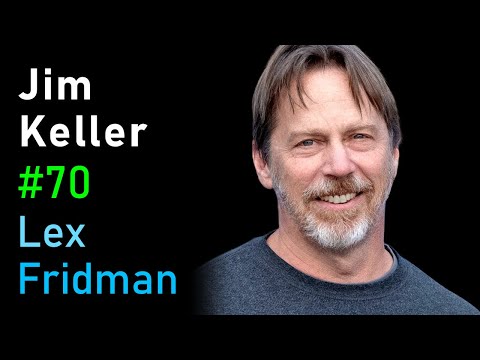
HN cites it whenever chip architecture, Moore's Law or CPU design comes up, as an unusually deep and accessible view from a top designer.
Lex Fridman interviews legendary chip architect Jim Keller about Moore's Law, microprocessor design, and first-principles thinking. Keller draws on his work at AMD, Apple, Tesla and Intel, discussing instruction sets, transistor budgets, and self-driving.
Jim Keller on Moore's Law and Microprocessor Design
Lex Fridman · Interview
HN cites it whenever chip architecture, Moore's Law or CPU design comes up, as an unusually deep and accessible view from a top designer.

Why it's here
HN commenters love Cliff Stoll's earnest, playful personality and point to this as a delightful look at his unusual warehouse.
Numberphile visits Cliff Stoll, the man behind ACME Klein Bottles, and sees how he stores a thousand glass Klein bottles in a crawlspace under his house. A remote-controlled forklift fetches them.
Cliff Stoll's 1,000 Klein Bottles
Numberphile · Interview
HN commenters love Cliff Stoll's earnest, playful personality and point to this as a delightful look at his unusual warehouse.

Why it's here
HN returns to it as Linus's own explanation of why shipping software on Linux is hard and why he dislikes GPLv3.
A 72-minute Q&A with Linus Torvalds at DebConf 14. Topics include the pain of distributing Linux binaries, distro fragmentation, kernel backwards compatibility, GPLv2 versus GPLv3 and conduct.
Linus Torvalds on Linux Distribution and GPLv3
Adnan Hodzic · Interview
HN returns to it as Linus's own explanation of why shipping software on Linux is hard and why he dislikes GPLv3.

Why it's here
HN cites it as evidence of Musk's hands-on engineering depth and for his advice to question requirements and not optimize things that should not exist.
Tim Dodd of Everyday Astronaut tours SpaceX's Starbase with Elon Musk as guide. They cover the high bay, grid fins, Raptor V2, the HLS lander and stage separation, and Musk explains his engineering management process.
Elon Musk Tours SpaceX Starbase and Explains Engineering
Everyday Astronaut · Interview
HN cites it as evidence of Musk's hands-on engineering depth and for his advice to question requirements and not optimize things that should not exist.

Why it's here
HN commenters point to it as an equation-free, charming way to hear Feynman explain physics to laypeople, including his famous refusal to explain magnetism with simple analogies.
A restored HD upload of the 1983 BBC series Fun to Imagine, in which Richard Feynman talks informally about everyday science. Topics include jiggling atoms, fire, rubber bands, magnets, electricity, mirrors, seeing, big numbers and ways of thinking.
Richard Feynman Explains Everyday Science
Christopher Sykes · Interview
HN commenters point to it as an equation-free, charming way to hear Feynman explain physics to laypeople, including his famous refusal to explain magnetism with simple analogies.
Why it's here
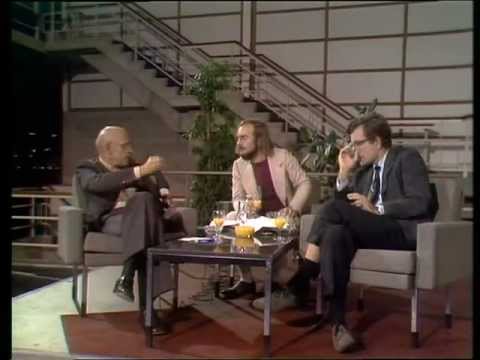
HN recommends it as a famous, revealing clash between two thinkers, though some note they largely talk past each other.
The full 1971 Dutch television debate between Noam Chomsky and Michel Foucault on human nature, with subtitles. They discuss creativity, knowledge, power and politics.
Chomsky and Foucault Debate Human Nature
withDefiance · Interview
HN recommends it as a famous, revealing clash between two thinkers, though some note they largely talk past each other.

Why it's here
HN uses it in debates about what OOP originally meant, since Kay's message-passing view lines up with Erlang's processes.
Joe Armstrong, creator of Erlang, interviews Alan Kay at Code Mesh. They discuss the meaning of object orientation, message passing, the META II paper, and the state of computer science.
Joe Armstrong Interviews Alan Kay on Object Orientation
Erlang Solutions · Interview
HN uses it in debates about what OOP originally meant, since Kay's message-passing view lines up with Erlang's processes.

Why it's here
Quoted in threads on motivation, agency and regret as an encouraging reminder that the world can be changed.
A short excerpt from a 1994 interview of Steve Jobs in which he says everything around us was made up by people no smarter than you, and that you can change and shape the world.
Steve Jobs on Changing and Shaping the World
Silicon Valley Historical Association · Interview
Quoted in threads on motivation, agency and regret as an encouraging reminder that the world can be changed.

Why it's here
HN recommends it as the best video introduction to the actor model, straight from its inventor, and revisited it after Hewitt's death.
A standing whiteboard conversation at Lang.NEXT 2012 among Carl Hewitt, Erik Meijer and Clemens Szyperski about the actor model. Hewitt, who originated the model, explains its foundations.
The Actor Model, Explained by Carl Hewitt
jasonofthel33t · Interview
HN recommends it as the best video introduction to the actor model, straight from its inventor, and revisited it after Hewitt's death.
Why it's here
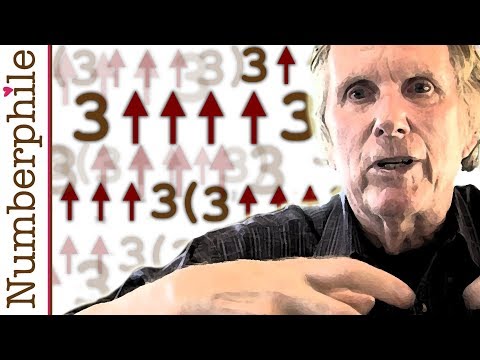
HN commenters recommend it for hearing Graham himself and for its clear introduction to up-arrow notation and enormous numbers.
Numberphile talks with mathematician Ron Graham about the magnitude of Graham's number, building up from arrow notation to show how impossibly large it is. It is part of a series of videos on this number.
Ron Graham Explains the Size of Graham's Number
Numberphile · Interview
HN commenters recommend it for hearing Graham himself and for its clear introduction to up-arrow notation and enormous numbers.

Why it's here
HN returns to it as a model of intellectual honesty and good explanation, often linking it in discussions of why-questions and science communication.
A 1983 BBC interview in which Richard Feynman is asked how magnets work and explains why 'why' questions are hard to answer in everyday terms. He reflects on what counts as an explanation and the limits of analogy.
Feynman on Magnets and the Limits of Explanation
Christopher Sykes · Interview
HN returns to it as a model of intellectual honesty and good explanation, often linking it in discussions of why-questions and science communication.

Why it's here
HN points to it as the best way to explain to ordinary people why privacy and mass surveillance matter.
John Oliver interviews Edward Snowden about NSA surveillance, including street interviews showing people have not thought about what the government can see. The segment famously frames the issue through private photos.
John Oliver and Edward Snowden on NSA Surveillance
LastWeekTonight · Interview
HN points to it as the best way to explain to ordinary people why privacy and mass surveillance matter.

Why it's here
HN returns to it constantly as the definitive critique of adversarial TV punditry, still seen as relevant to polarized media and online discourse.
Jon Stewart appears as a guest on CNN's Crossfire in 2004 and criticizes hosts Tucker Carlson and Paul Begala for turning political debate into partisan theater that hurts America.
Jon Stewart Critiques Crossfire's Political Debate (2004)
Alex Felker · Interview
HN returns to it constantly as the definitive critique of adversarial TV punditry, still seen as relevant to polarized media and online discourse.

Why it's here
Recommended to people who find it inspiring or perspective-changing on pursuing goals, open-ended search and AI beyond optimization.
A long Machine Learning Street Talk interview with Kenneth Stanley, creator of NEAT and novelty search, about his book on why greatness cannot be planned. They discuss open-endedness, the tyranny of objectives, serendipity and the evolution of ideas.
Why Greatness Cannot Be Planned — Kenneth Stanley
Machine Learning Street Talk · Interview
Recommended to people who find it inspiring or perspective-changing on pursuing goals, open-ended search and AI beyond optimization.

Why it's here
HN uses it as the source of the 'bicycle for the mind' quote, which commenters cite in discussions of computing, programming and LLMs.
A short clip of Steve Jobs describing the computer as a bicycle for the mind. He compares human efficiency of travel to what computers do for mental work.
Steve Jobs: Computers Are a Bicycle for the Mind
Michael Lawrence · Interview
HN uses it as the source of the 'bicycle for the mind' quote, which commenters cite in discussions of computing, programming and LLMs.

Why it's here
HN recommends it in hair-loss threads as a funny, inspiring example of accepting baldness.
Patrick Stewart on the BBC's Parkinson talk show talks humorously about going bald, how it affected his career and relationships, and how he came to accept it.
Patrick Stewart on Accepting Baldness
BBC Studios · Interview
HN recommends it in hair-loss threads as a funny, inspiring example of accepting baldness.

Why it's here
The go-to primary source in basic income threads for Friedman's negative income tax idea.
A 1968 Firing Line interview in which Milton Friedman explains the negative income tax, a proposal to replace welfare bureaucracy with direct payments.
Milton Friedman Explains the Negative Income Tax
LibertyPen · Interview
The go-to primary source in basic income threads for Friedman's negative income tax idea.

Why it's here
HN cites it as the classic example of an interviewer misrepresenting a guest, though opinions on who came out better differ.
Channel 4 News's full interview with Jordan Peterson, in which Cathy Newman presses him on the gender pay gap, patriarchy, campus protests and postmodernism. It was widely discussed for its confrontational style.
Jordan Peterson Interview on the Gender Pay Gap and Postmodernism
Channel 4 News · Interview
HN cites it as the classic example of an interviewer misrepresenting a guest, though opinions on who came out better differ.

Why it's here
HN commenters recommend it for its take on managing young employees and on how technology and approval-seeking affect behavior.
An excerpt of Simon Sinek on Inside Quest discussing millennials in the workplace. He covers parenting, technology, social media dopamine and what that means for managers.
Simon Sinek on Millennials, Technology and the Workplace
David Crossman · Interview
HN commenters recommend it for its take on managing young employees and on how technology and approval-seeking affect behavior.
Why it's here
HN commenters cite it whenever someone asks whether to quit a job or start a company, as a simple decision heuristic.
A three-minute clip of Jeff Bezos describing his Regret Minimization Framework: imagining yourself at 80 to decide whether to leave a Wall Street job to start Amazon.
Jeff Bezos's Regret Minimization Framework
Micky Thompson · Interview
HN commenters cite it whenever someone asks whether to quit a job or start a company, as a simple decision heuristic.

Why it's here
HN commenters bring it up in threads on propaganda, influence operations and platforms like TikTok, saying it feels more relevant than ever.
A 1985 interview by G. Edward Griffin with former KGB operative Yuri Bezmenov. He describes long-running Soviet efforts at ideological subversion and manipulation of US public opinion.
Yuri Bezmenov on ideological subversion and propaganda
20th Century Time Machine · Interview
HN commenters bring it up in threads on propaganda, influence operations and platforms like TikTok, saying it feels more relevant than ever.

Why it's here
Commenters post it whenever a thread touches on soft sciences, replication problems, or what counts as real science.
A two-minute clip of Richard Feynman explaining why he considers much of social science pseudoscience. He stresses how easy it is to fool yourself and how much care real knowledge takes.
Richard Feynman on Self-Deception and Pseudoscience
Jacob Edward · Interview
Commenters post it whenever a thread touches on soft sciences, replication problems, or what counts as real science.

Why it's here
Recommended as a long, rich first-hand account of Mach, NeXT and Apple history and of working for Steve Jobs.
A Computer History Museum oral history with Avie Tevanian covering his math talent, work on the Mach microkernel at CMU, joining NeXT, leading NEXTSTEP development and the 1996 Apple acquisition.
Avie Tevanian on Mach, NeXT and Apple: Oral History Part 1
Computer History Museum · Interview
Recommended as a long, rich first-hand account of Mach, NeXT and Apple history and of working for Steve Jobs.

Why it's here
Cited in propaganda and disinformation threads, though some commenters present it more as a prediction of current events than established analysis.
The full 1984 interview with Yuri Bezmenov, a former KGB operative, in which he lays out four stages of ideological subversion. It is a long interview with G. Edward Griffin.
Yuri Bezmenov's 1984 Interview on Four Stages of Subversion
Nicholas Marshall · Interview
Cited in propaganda and disinformation threads, though some commenters present it more as a prediction of current events than established analysis.
Why it's here
Cited constantly as the classic answer to 'why' questions, on explanation, frames of reference and the limits of physics.
A short clip of Richard Feynman answering an interviewer's question about why magnets repel, explaining that a 'why' question depends on a shared framework of understanding. It illustrates how hard it is to explain fundamentals to a layperson.
Richard Feynman Explains Why Magnets Repel
firewalker · Interview
Cited constantly as the classic answer to 'why' questions, on explanation, frames of reference and the limits of physics.

Why it's here
HN points to it constantly in threads on inner monologue, visual versus verbal thinking and communication as the classic, entertaining demonstration that minds work differently.
An excerpt from the 1983 BBC series Fun to Imagine in which Richard Feynman describes how he and a mathematician friend counted in their heads in different ways, one verbally and one visually. It shows that people can reach the same goal through quite different mental methods.
Richard Feynman on Verbal and Visual Thinking
Christopher Sykes · Interview
HN points to it constantly in threads on inner monologue, visual versus verbal thinking and communication as the classic, entertaining demonstration that minds work differently.

Why it's here
HN points to it whenever Dwarf Fortress comes up, mainly for the alcohol-poisoned cats bug story and a developer's view of the game's depth.
A /noclip interview with Tarn Adams of Bay 12 Games about Dwarf Fortress: where the ASCII simulation came from, how it works, and the plans for its Steam release. It includes his telling of the famous bug in which cats were poisoned by alcohol.
Dwarf Fortress Creator Tarn Adams on the Game's Origins
/noclip · Interview
HN points to it whenever Dwarf Fortress comes up, mainly for the alcohol-poisoned cats bug story and a developer's view of the game's depth.

Why it's here
HN recommends it as a fascinating look at the i3's revolutionary materials and production methods, and as a contrast point for Tesla.
An Autoline After Hours episode where Sandy Munro discusses his complete teardown of the BMW i3, along with automotive journalists. It covers the car's carbon fiber construction and manufacturing technology.
BMW i3 Teardown: Carbon Fiber and Manufacturing
Autoline Network · Interview
HN recommends it as a fascinating look at the i3's revolutionary materials and production methods, and as a contrast point for Tesla.

Why it's here
Recommended in threads on fasting and nutrition as a deep dive from the lead researcher on time-restricted eating.
Rhonda Patrick interviews Salk Institute researcher Satchidananda Panda about circadian rhythms and the timing of food. They cover time-restricted feeding and its links to obesity, muscle mass, heart health, and light exposure.
Satchidananda Panda on Time-Restricted Feeding and Circadian Rhythms
FoundMyFitness · Interview
Recommended in threads on fasting and nutrition as a deep dive from the lead researcher on time-restricted eating.

Why it's here
HN points to it as a rare side-by-side of the TypeScript and Dart designers, often to show how the two approaches to improving JavaScript differed.
A Channel 9 conversation recorded at GOTO 2012 between Anders Hejlsberg (TypeScript) and Lars Bak (Dart). They discuss the two languages and different approaches to making JavaScript development safer, including runtime type checking.
TypeScript and Dart designers compare their approaches to JavaScript
DartlangTV · Interview
HN points to it as a rare side-by-side of the TypeScript and Dart designers, often to show how the two approaches to improving JavaScript differed.

Why it's here
HN commenters point to it as the first-person story of how Myst grew out of HyperCard and fit on CD-ROM, especially in threads about HyperCard and retro game constraints.
Myst co-creator Rand Miller recounts how the HyperCard-built game struggled to run on 1x CD-ROM drives. He and his brother Robyn compressed image and audio data heavily to get acceptable performance. Part of Ars Technica's War Stories series.
How Myst Fit on 1x CD-ROM
Ars Technica · Interview
HN commenters point to it as the first-person story of how Myst grew out of HyperCard and fit on CD-ROM, especially in threads about HyperCard and retro game constraints.

Why it's here
HN commenters recommend it as a data-driven explanation of the 2024 election and voter trends.
Ezra Klein interviews Democratic pollster David Shor, who walks through survey data and charts explaining the 2024 election results. They discuss voter shifts, the education divide and what Democrats got wrong.
David Shor on the 2024 Election's Voter Shifts
The Ezra Klein Show · Interview
HN commenters recommend it as a data-driven explanation of the 2024 election and voter trends.

Why it's here
In early pandemic threads, HN commenters pointed to it as an uninterrupted, practical expert view from Korea on masks, testing and airborne spread.
Asian Boss interviews Professor Kim Woo-joo of Korea University Guro Hospital about COVID-19 in early 2020. He covers masks, testing, aerosol spread, and South Korea's response.
COVID-19 masks, testing and spread in South Korea | Kim Woo-joo
Asian Boss · Interview
In early pandemic threads, HN commenters pointed to it as an uninterrupted, practical expert view from Korea on masks, testing and airborne spread.

Why it's here
HN commenters point to it as a researcher-led answer on omega-3 dosing, with the takeaway that most people take too little.
Rhonda Patrick interviews Dr. Bill Harris, co-inventor of the Omega-3 Index and author of more than 300 papers on fatty acids. They cover EPA and DHA dosing, fish oil studies such as REDUCE-IT, and how omega-3 levels relate to health and longevity.
Bill Harris on Omega-3 Dosing and the Omega-3 Index
FoundMyFitness · Interview
HN commenters point to it as a researcher-led answer on omega-3 dosing, with the takeaway that most people take too little.

Why it's here
HN reaches for it constantly as evidence of Apple's long-standing privacy stance and as a yardstick for judging Apple, Facebook and others.
A short clip of Steve Jobs at the 2010 D8 conference, interviewed by Walt Mossberg, defining privacy as people knowing what they are signing up for, in plain English and repeatedly. The discussion centered on location data.
Steve Jobs Defines Apple's View of Privacy (2010)
iwasjojo · Interview
HN reaches for it constantly as evidence of Apple's long-standing privacy stance and as a yardstick for judging Apple, Facebook and others.

Why it's here
HN commenters point to it in threads on homelessness and drug policy as a short, honest firsthand account from an articulate addict.
A short street interview from Invisible People with Keith, a homeless man in Los Angeles who lost his housing-industry job in the crash and moved from painkillers to heroin because it was cheaper. He talks candidly about the grip of addiction.
Keith Describes Heroin Addiction and Homelessness in Los Angeles
Invisible People · Interview
HN commenters point to it in threads on homelessness and drug policy as a short, honest firsthand account from an articulate addict.

Why it's here
HN uses it as a canonical anecdote that designers badly predicted player behavior, and in threads about UO and sharding.
An Ars Technica War Stories episode in which Richard Garriott and Starr Long describe Ultima Online's planned virtual ecology and how players wrecked it. Players slaughtered the animals and also broke the in-game economy.
How Players Disrupted Ultima Online's Virtual Ecology
Ars Technica · Interview
HN uses it as a canonical anecdote that designers badly predicted player behavior, and in threads about UO and sharding.

Why it's here
HN commenters call it an entertaining, complementary philosophical take on surveillance, with a funny story about jamming secret police.
Slavoj Zizek and Paul Holdengraber discuss surveillance and whistleblowers at the International Authors' Stage, ranging over Snowden, Assange, Pussy Riot and humor.
Žižek and Holdengräber Discuss Surveillance and Whistleblowers
Det Kgl. Bibliotek · Interview
HN commenters call it an entertaining, complementary philosophical take on surveillance, with a funny story about jamming secret police.

Why it's here
HN recommends it as a fascinating, mind-expanding interview on bioelectricity and non-reductionist biology.
Curt Jaimungal interviews biologist Michael Levin of Tufts about consciousness, bioelectricity, emergence, and cancer research. The conversation challenges reductionist views of life.
Michael Levin on Bioelectricity, Consciousness and Cancer
Curt Jaimungal · Interview
HN recommends it as a fascinating, mind-expanding interview on bioelectricity and non-reductionist biology.

Why it's here
HN commenters recommend it as a deeper, more legitimate interview on fasting mechanics than typical diet content.
Rhonda Patrick interviews USC gerontologist Valter Longo about fasting, the fasting-mimicking diet, and their effects on longevity, cancer, and multiple sclerosis. They discuss mechanisms such as IGF-1 and autophagy and clinical trials.
Valter Longo on Fasting-Mimicking Diets and Longevity
FoundMyFitness · Interview
HN commenters recommend it as a deeper, more legitimate interview on fasting mechanics than typical diet content.

Why it's here
Praised as a remarkable piece of social engineering, spoofed caller ID plus pretexting, that produced direct evidence of the poisoning.
Alexei Navalny phones an FSB chemical-weapons specialist, posing as a senior official, and gets him to describe the 2020 Novichok poisoning and its cover-up. The video is in Russian; HN commenters point to English subtitles.
Навальный добился признания от сотрудника ФСБ о его отравлении
Алексей Навальный · Interview
Praised as a remarkable piece of social engineering, spoofed caller ID plus pretexting, that produced direct evidence of the poisoning.

Why it's here
HN links it for Cantrill's entertaining epoll versus kqueue rant and his stories, such as bricking a machine with rm -rf.
A BSD Now episode featuring a long interview with Joyent CTO Bryan Cantrill on dtrace, ZFS, pkgsrc, containers and more. It includes his rant on why Linux epoll is flawed and stories from Sun.
Bryan Cantrill on DTrace, ZFS, Containers and epoll
Jupiter Broadcasting · Interview
HN links it for Cantrill's entertaining epoll versus kqueue rant and his stories, such as bricking a machine with rm -rf.

Why it's here
HN cites it for an insider's look at defense work and at how the military thinks about information operations and cyberspace.
Destin Sandlin of Smarter Every Day explains Multi-Domain Operations through footage from his last mission at RIMPAC 2018. He covers missile and torpedo testing and interviews military leaders about the cyber and information domains.
Multi-Domain Operations: War, Cybersecurity and RIMPAC 2018
SmarterEveryDay · Interview
HN cites it for an insider's look at defense work and at how the military thinks about information operations and cyberspace.