Videos Hacker News keeps recommending, with honest titles.
Invite only: friends here see what each other watch.
Classics

Why it's here
HN's go-to recommendation for learning linear algebra intuition, repeatedly credited with making concepts click and complementing textbooks.
The first chapter of 3Blue1Brown's Essence of Linear Algebra series, introducing vectors with animated geometric visuals. It begins a series that builds intuition for linear algebra from the basics.
Vectors | The Essence of Linear Algebra
3Blue1Brown · Course
HN's go-to recommendation for learning linear algebra intuition, repeatedly credited with making concepts click and complementing textbooks.
Why it's here
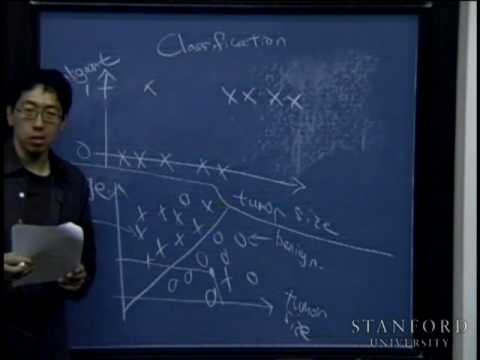
Recommended as the rigorous, math-heavy original course, deeper than the Coursera version, for learning machine learning.
The first lecture of Andrew Ng's Stanford CS229 Machine Learning course, giving an overview of the course. It introduces supervised and unsupervised learning, learning theory and reinforcement learning.
Stanford CS229 Lecture 1: Machine Learning Overview
Stanford · Course
Recommended as the rigorous, math-heavy original course, deeper than the Coursera version, for learning machine learning.
Why it's here
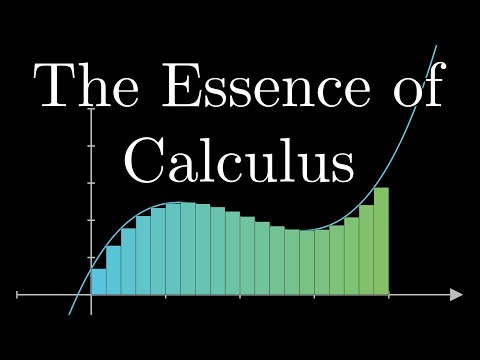
A staple recommendation for anyone learning math, praised for visual intuition that makes memorized formulas make sense.
The first video of 3Blue1Brown's Essence of Calculus series, which builds toward integrals, derivatives, and the fundamental theorem of calculus from a simple geometry question. It aims to make viewers feel they could have invented calculus themselves.
The Essence of Calculus: Derivatives, Integrals and Their Link
3Blue1Brown · Course
A staple recommendation for anyone learning math, praised for visual intuition that makes memorized formulas make sense.

Why it's here
Frequently recommended as an excellent, clear introductory RL course from the lead of AlphaGo, pairing well with Sutton and Barto.
The first lecture of David Silver's reinforcement learning course, introducing the field and its basic concepts. The course follows the Sutton and Barto textbook.
David Silver: Introduction to Reinforcement Learning
Google DeepMind · Course
Frequently recommended as an excellent, clear introductory RL course from the lead of AlphaGo, pairing well with Sutton and Barto.
Why it's here
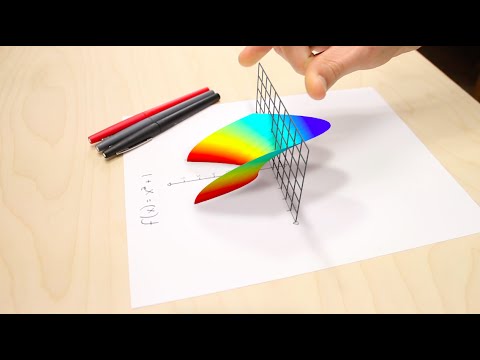
HN repeatedly recommends the series as the best intuition-first, visual introduction to linear algebra and a benchmark for clear math explanation.
A five-minute preview of 3Blue1Brown's Essence of Linear Algebra series, which uses animation to build geometric intuition for topics from a standard linear algebra course.
Essence of Linear Algebra: Series Preview
3Blue1Brown · Course
HN repeatedly recommends the series as the best intuition-first, visual introduction to linear algebra and a benchmark for clear math explanation.
Why it's here
HN commenters rate the series as some of the best visual teaching on complex numbers and recommend it for building intuition.
The first part of Welch Labs' series on imaginary numbers, presenting them as the natural extension of the number line into two dimensions. It covers the history and the math with strong visuals.
Imaginary numbers as a two-dimensional number system
Welch Labs · Course
HN commenters rate the series as some of the best visual teaching on complex numbers and recommend it for building intuition.

Why it's here
Recommended as an easy-to-follow math history course that gives perspective on the subject.
The first lecture of N J Wildberger's History of Mathematics course, starting with Pythagoras' theorem and following Stillwell's text. It emphasizes the flow of ideas over proofs.
Pythagoras' Theorem | History of Mathematics Lecture 1
Insights into Mathematics · Course
Recommended as an easy-to-follow math history course that gives perspective on the subject.
Why it's here
Recommended repeatedly in 'where do I start with ML' threads as a clear, math-aware introduction.
The first lecture of Caltech's CS 156 Machine Learning course by Yaser Abu-Mostafa, introducing the learning problem and supervised, unsupervised and reinforcement learning. It is one of 18 lectures in the Learning from Data course.
Caltech ML Lecture 1: The Learning Problem
caltech · Course
Recommended repeatedly in 'where do I start with ML' threads as a clear, math-aware introduction.

Why it's here
HN repeatedly recommends this series as a clear, step-by-step way to really understand Kalman filtering.
The first video in a 55-part series by Michel van Biezen that introduces the Kalman filter and builds from the rationale through algebraic examples to the full matrix treatment. The videos are short, blackboard-style lectures.
What Is a Kalman Filter? | 1 of 55
Michel van Biezen · Course
HN repeatedly recommends this series as a clear, step-by-step way to really understand Kalman filtering.

Why it's here
HN commenters call it one of the best JavaScript courses: rigorous and deep but not boring, and freely available.
The first 3.5 hours of Tony Alicea's Udemy course on JavaScript's inner workings, covering topics such as first-class functions, closures, prototypal inheritance and how the language behaves under the hood.
JavaScript's Weird Parts: The First 3.5 Hours
Tony Alicea · Course
HN commenters call it one of the best JavaScript courses: rigorous and deep but not boring, and freely available.

Why it's here
Recommended as a free, first-principles finance course for software engineers wanting to learn business and finance.
First session of MIT 15.401 Finance Theory I (Fall 2008) taught by Andrew Lo, giving a course overview and introducing core finance concepts. The course ran during the 2007-08 financial crisis.
MIT Finance Theory I: Introduction and Course Overview
MIT OpenCourseWare · Course
Recommended as a free, first-principles finance course for software engineers wanting to learn business and finance.

Why it's here
Recommended as a gold-standard free course for anyone learning to build precision mechanical things.
First of an 18-part lecture series by engineer Dan Gelbart on building prototypes. The series covers practical mechanical design and fabrication of precision machines.
Dan Gelbart: Building Precision Prototypes, Part 1
Dan Gelbart · Course
Recommended as a gold-standard free course for anyone learning to build precision mechanical things.
Why it's here
HN commenters recommend it as a simple, direct entry point for beginners who want to learn computer science, not just programming.
First lecture of MIT 6.00, an introductory computer science course taught in Python by Eric Grimson and John Guttag. It covers the goals of the course, what computation is, and data types, operators and variables.
MIT 6.00: Introduction to Computer Science, Lecture 1
MIT OpenCourseWare · Course
HN commenters recommend it as a simple, direct entry point for beginners who want to learn computer science, not just programming.

Why it's here
HN users recommend MangoJelly's thorough tutorials as the best way to learn FreeCAD properly, since trial and error doesn't work.
The introduction to MangoJelly's beginner course for FreeCAD 1.0. The course teaches solid modeling with the Part Design, Sketcher and Part workbenches.
FreeCAD 1.0 Beginner Course Introduction
MangoJelly Solutions for FreeCAD · Course
HN users recommend MangoJelly's thorough tutorials as the best way to learn FreeCAD properly, since trial and error doesn't work.

Why it's here
HN recommends the lecture series as a foundational, wide-ranging grounding in modern global politics.
The opening lecture of Ian Shapiro's Yale course Power and Politics in Today's World, which examines political dynamics and institutions over the past quarter century, including inequality, declining unions and new forms of authoritarianism.
Ian Shapiro: Introduction to Power and Politics Today
YaleCourses · Course
HN recommends the lecture series as a foundational, wide-ranging grounding in modern global politics.

Why it's here
HN recommends it as a fast, accessible way to start learning Python.
The first part of Google's Python Class, taught by Nick Parlante, introducing the language and its strings. It is aimed at people with some programming familiarity and comes with exercises.
Google Python Class: Day 1, Part 1 — Strings
Google for Developers · Course
HN recommends it as a fast, accessible way to start learning Python.

Why it's here
Recommended as a good first-steps shader tutorial that also teaches broad graphics knowledge.
The first part of Freya Holmer's three-part, nearly four-hour lecture on shader coding for game devs in Unity. It covers what shaders are, vertex and fragment shaders, interpolators, data types, blending and textures.
Shader Basics, Blending and Textures in Unity
Freya Holmér · Course
Recommended as a good first-steps shader tutorial that also teaches broad graphics knowledge.

Why it's here
Praised for its visualizations and pedagogy in threads about physics and differential geometry.
The first of an eight-part ScienceClic series building general relativity, covering worldlines, proper time and coordinate systems with animated visualizations.
General Relativity 1/8: Spacetime and Worldlines
ScienceClic English · Course
Praised for its visualizations and pedagogy in threads about physics and differential geometry.

Why it's here
HN considers the course one of the best hands-on ways into deep learning, praising the code-first teaching style.
Lesson 1 of fast.ai's Practical Deep Learning for Coders, taught by Jeremy Howard. It takes coders from running code in a Jupyter notebook straight into training a real image model.
fast.ai Lesson 1: Train an Image Model in a Jupyter Notebook
Jeremy Howard · Course
HN considers the course one of the best hands-on ways into deep learning, praising the code-first teaching style.

Why it's here
HN rates the series as one of the best physics lecture courses on YouTube, with an engaging format and historical context.
The first episode of Caltech's The Mechanical Universe, a 52-part introductory university physics series. David Goodstein introduces ideas from Copernicus to Newton, linking the physics of the heavens and the earth with computer animation.
The Mechanical Universe, Episode 1: Introduction to Physics
caltech · Course
HN rates the series as one of the best physics lecture courses on YouTube, with an engaging format and historical context.

Why it's here
HN commenters point to it as a thorough, free lecture series for anyone wanting the nitty-gritty of GPS and GNSS.
Course outline for Stanford's online GNSS course, introducing how GPS works and the many uses of satellite navigation. The series pairs short lectures with backyard experiments using smartphones.
Stanford GNSS Course: GPS and Satellite Navigation Overview
LaintalAy · Course
HN commenters point to it as a thorough, free lecture series for anyone wanting the nitty-gritty of GPS and GNSS.

Why it's here
HN mentions it with caveats: despite the author's reputation, commenters say it contains good investing and Excel material.
The first lesson of Martin Shkreli's introductory investing and finance course, running about two and a half hours. His related tutorials cover reading 10-K filings and building DCF models.
Martin Shkreli's introductory investing and finance lesson
Mr Martin Shkreli · Course
HN mentions it with caveats: despite the author's reputation, commenters say it contains good investing and Excel material.

Why it's here
Recommended as a practical, approachable build-it-step-by-step introduction to writing compilers, light on theory.
The first episode of a long live-coding series in which Immo Landwerth builds the Minsk compiler for a small language in C#. It starts with a basic expression evaluator and builds toward a full language.
Building a Basic Expression Evaluator in C#
Immo Landwerth (terrajobst) · Course
Recommended as a practical, approachable build-it-step-by-step introduction to writing compilers, light on theory.

Why it's here
HN lists it as a free, brilliant introduction to deep learning and computer vision, often within ML self-study plans.
The first lecture of Stanford's CS231n Winter 2016 course on convolutional neural networks for visual recognition, introducing the course and the historical context of computer vision.
Stanford CS231n Lecture 1: CNNs and Computer Vision
Andrej Karpathy · Course
HN lists it as a free, brilliant introduction to deep learning and computer vision, often within ML self-study plans.