Videos Hacker News keeps recommending, with honest titles.
Invite only: friends here see what each other watch.
Classics

Why it's here
HN treats it as the canonical, near-universally recommended lecture on giving talks and presentations.
Patrick Winston's long-running MIT lecture on public speaking teaches heuristic rules for talks. It covers how to start, use time and place, boards, props and slides, and how to inform, persuade and finish.
How to Speak: MIT Lecture on Public Speaking
MIT OpenCourseWare · Lecture
HN treats it as the canonical, near-universally recommended lecture on giving talks and presentations.

Why it's here
HN treats it as the best starting point for really understanding backprop and neural nets, because Karpathy explains the why with intuition and builds everything in code.
Andrej Karpathy's first Neural Networks: Zero to Hero lecture, which builds micrograd, a tiny autograd engine, from scratch in Python. It explains backpropagation and neural network training step by step, assuming only basic Python and some high-school calculus.
Building micrograd: Backpropagation from Scratch
Andrej Karpathy · Lecture
HN treats it as the best starting point for really understanding backprop and neural nets, because Karpathy explains the why with intuition and builds everything in code.
Why it's here
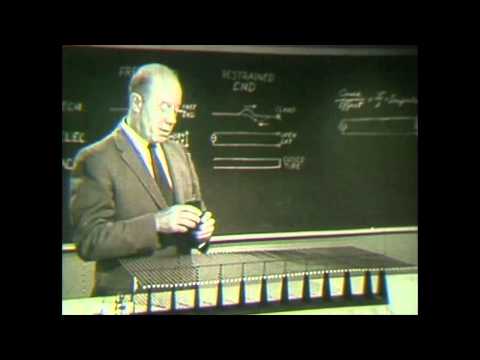
HN repeatedly calls it the clearest introduction to waves and transmission-line behavior, better than modern explainers.
A Bell Labs film in which Dr. J.N. Shive uses a mechanical wave machine to demonstrate reflection, standing waves, resonance and impedance matching. He includes some equations but relies mostly on real-world examples a layperson can follow.
How Waves Reflect, Resonate, and Form Standing Waves
AT&T Tech Channel · Lecture
HN repeatedly calls it the clearest introduction to waves and transmission-line behavior, better than modern explainers.
Why it's here
One of the most consistently recommended lecture series on HN, praised as fascinating, funny and eye-opening about human behavior across many scales.
The opening lecture of Robert Sapolsky's Stanford course on Human Behavioral Biology, explaining the course premise and how to avoid categorical thinking. It starts a roughly 25-lecture series on how biology, genes, hormones and environment shape behavior.
Introduction to Human Behavioral Biology
Stanford · Lecture
One of the most consistently recommended lecture series on HN, praised as fascinating, funny and eye-opening about human behavior across many scales.

Why it's here
Repeatedly called the best way to understand ADHD, and recommended to anyone before commenting on it.
Dr. Russell Barkley's roughly three-hour lecture on ADHD for parents of affected children. It explains what ADHD is and how the ADHD brain differs.
Understanding ADHD: A Lecture for Parents
Jason Salotti · Lecture
Repeatedly called the best way to understand ADHD, and recommended to anyone before commenting on it.
Why it's here
HN users repeatedly say it changed how they think about writing, calling it a masterclass useful far beyond academia.
Larry McEnerney of the University of Chicago Writing Program gives a graduate-student session on writing effectively. His core idea is that readers care about value to them, not the writer's thinking process.
The Craft of Writing Effectively
UChicago Social Sciences · Lecture
HN users repeatedly say it changed how they think about writing, calling it a masterclass useful far beyond academia.

Why it's here
HN commenters repeatedly say it changed how they hear political speech and recommend it for understanding why opponents are not simply stupid.
Cognitive scientist George Lakoff lectures on how political debates are framed through language and metaphors tied to values, and on the moral worldviews behind progressive and conservative politics. It was given in 2005 at UC San Diego.
George Lakoff on Moral Politics and Political Framing
University of California Television (UCTV) · Lecture
HN commenters repeatedly say it changed how they hear political speech and recommend it for understanding why opponents are not simply stupid.

Why it's here
Recommended again and again as the best accessible overview of fusion physics, useful for judging fusion announcements and understanding why high-temperature superconducting magnets matter.
Zach Hartwig of MIT introduces the key concepts of magnetic fusion energy and the state of fusion research. He then presents MIT's proposed pathway of using high-field superconducting magnets to build smaller, cheaper tokamaks on a climate-relevant timescale.
MIT's Pathway to Fusion Energy: High-Field Tokamaks
MIT Plasma Science and Fusion Center · Lecture
Recommended again and again as the best accessible overview of fusion physics, useful for judging fusion announcements and understanding why high-temperature superconducting magnets matter.
Why it's here
HN returns to it repeatedly as the best single introduction to understanding clinical depression.
Stanford professor Robert Sapolsky lectures on depression as a real biological disease. He covers its biological and psychological causes, how it differs from ordinary sadness, and ideas such as learned helplessness. He ties these together into one account.
Robert Sapolsky: The Biology and Psychology of Depression
Stanford · Lecture
HN returns to it repeatedly as the best single introduction to understanding clinical depression.
Why it's here
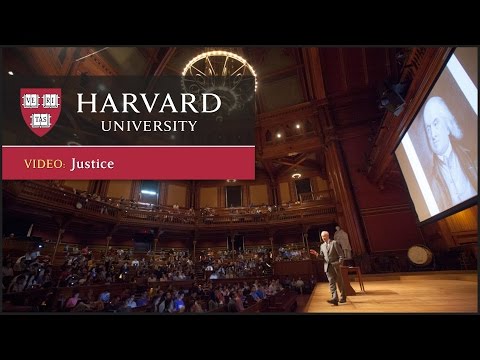
One of the most frequently recommended online lecture series on HN, praised for giving people vocabulary to examine ethical positions and for Sandel's skilled teaching.
The first episode of Michael Sandel's Harvard course on moral reasoning, opening with the trolley problem and the choice between killing one to save five. Sandel draws out student arguments and introduces utilitarian and other approaches to justice.
Justice: The Moral Side of Murder | Harvard Lecture 1
Harvard University · Lecture
One of the most frequently recommended online lecture series on HN, praised for giving people vocabulary to examine ethical positions and for Sandel's skilled teaching.
Why it's here
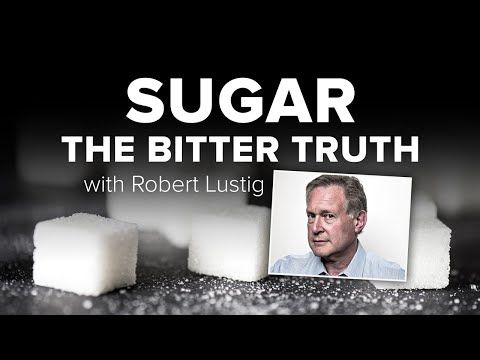
The most-linked YouTube video on HN, recommended as an in-depth explanation of fructose metabolism.
Robert Lustig of UCSF lectures on the biochemistry of sugar, arguing that fructose and lack of fiber drive the obesity epidemic via insulin. It is the widely viewed 90-minute talk that popularized the anti-sugar case.
Robert Lustig: Sugar, Fructose and the Obesity Epidemic
University of California Television (UCTV) · Lecture
The most-linked YouTube video on HN, recommended as an in-depth explanation of fructose metabolism.

Why it's here
HN calls it mandatory viewing on the AGC, praising the speaker's enthusiasm and the clear account of restartable, robust software design.
Robert Wills of TNMoC explains the Apollo Guidance Computer hardware and software, then walks through the Apollo 11 landing procedure step by step, including the 1202 alarms.
Apollo Guidance Computer: Hardware, Software and Apollo 11 Landing
TNMoC · Lecture
HN calls it mandatory viewing on the AGC, praising the speaker's enthusiasm and the clear account of restartable, robust software design.
Why it's here
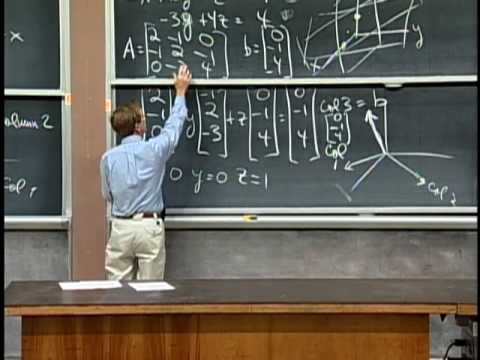
It is HN's default recommendation for learning linear algebra, praised for Strang's teaching and for building real understanding useful in machine learning.
The first lecture of Gilbert Strang's MIT 18.06 Linear Algebra course, covering the geometry of linear equations. It opens a full 35-lecture university course.
MIT 18.06 Lecture 1: The Geometry of Linear Equations
MIT OpenCourseWare · Lecture
It is HN's default recommendation for learning linear algebra, praised for Strang's teaching and for building real understanding useful in machine learning.
Why it's here
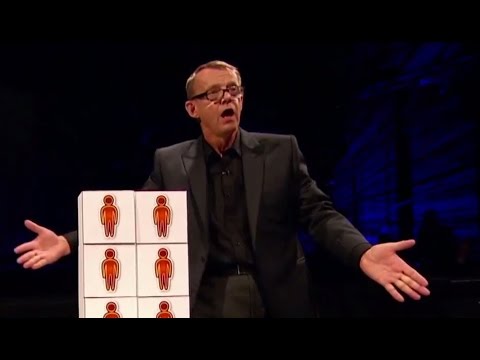
HN repeatedly recommends it to counter overpopulation alarm with data on falling birth rates.
Hans Rosling uses data and animated statistics to show how world population is changing, why birth rates fall as child survival and wealth rise, and why population is expected to peak around 11 billion. It also tackles common misconceptions about Africa and family planning.
Hans Rosling on Population Growth and Falling Birth Rates
Gapminder Foundation · Lecture
HN repeatedly recommends it to counter overpopulation alarm with data on falling birth rates.
Why it's here
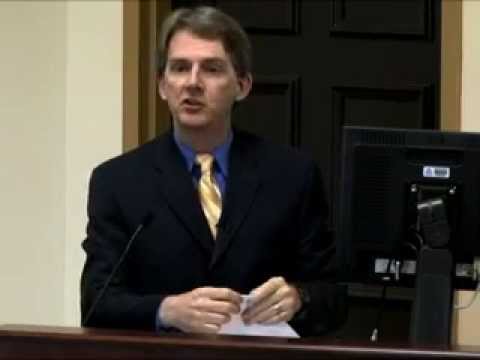
HN treats it as the canonical video to link whenever talking to police or interrogations come up.
Regent Law professor James Duane gives startling reasons why people, even innocent ones, should always exercise their Fifth Amendment rights rather than talk to police. It is based on his article and book on the subject.
The Fifth Amendment and Talking to Police
Regent University School of Law · Lecture
HN treats it as the canonical video to link whenever talking to police or interrogations come up.
Why it's here
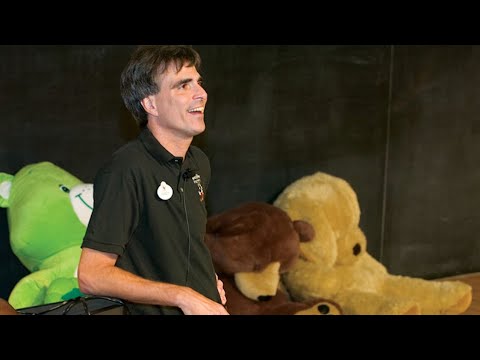
Perennially recommended as an inspirational talk for people facing setbacks or choosing a direction, and a source of oft-quoted lines like the brick wall.
Randy Pausch's 2007 last lecture at Carnegie Mellon, given as he was dying of pancreatic cancer. He reflects on achieving childhood dreams, overcoming obstacles and helping others reach theirs.
Randy Pausch's Last Lecture on Achieving Childhood Dreams
Carnegie Mellon University · Lecture
Perennially recommended as an inspirational talk for people facing setbacks or choosing a direction, and a source of oft-quoted lines like the brick wall.

Why it's here
HN people recommend the SICP lectures as a deeper, livelier route into the book and a formative course even for seasoned programmers.
The first lecture of MIT's 6.001 (SICP) with Abelson and Sussman, giving an overview of the course and an introduction to Lisp. It argues that computer science is about managing complexity and abstraction, not computers.
MIT 6.001: Introduction to Lisp and Managing Complexity
MIT OpenCourseWare · Lecture
HN people recommend the SICP lectures as a deeper, livelier route into the book and a formative course even for seasoned programmers.

Why it's here
HN brings it up in any thread about autopilot, Tesla FSD, self-driving cars and crashes as the classic lecture on automation dependency.
A re-upload of American Airlines captain Warren Vanderburgh's 1997 presentation warning that pilots who over-rely on cockpit automation lose manual flying skills and awareness. The uploader adds context from his own flying.
Children Of The Magenta Line
Mossie Fly · Lecture
HN brings it up in any thread about autopilot, Tesla FSD, self-driving cars and crashes as the classic lecture on automation dependency.
Why it's here
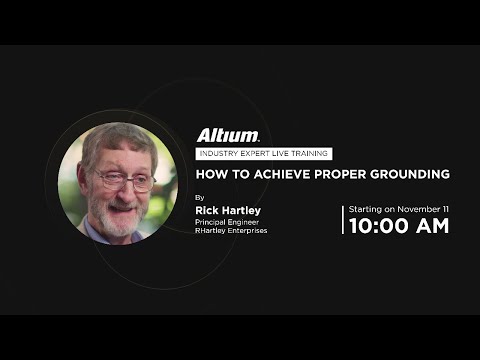
Hailed as the best video on electrical engineering and an essential, eye-opening watch for anyone designing high-speed boards.
Rick Hartley gives a roughly two-hour live training on proper grounding in PCB design. He explains how energy actually flows in the space between conductors, and how that governs noise, EMI, return paths and signal reflections.
PCB Grounding: Return Paths, Noise, EMI, and Signal Reflections
Altium · Lecture
Hailed as the best video on electrical engineering and an essential, eye-opening watch for anyone designing high-speed boards.

Why it's here
Seen as a classic and often the moment programming 'clicks'; commenters praise Abelson's opening that computer science is not about computers.
The first lecture of MIT's 1986 6.001 Structure and Interpretation of Computer Programs, given by Harold Abelson, introducing Lisp and the idea of computer science as the study of process.
MIT 6.001 (1986) Lecture 1: Lisp and Processes
MIT OpenCourseWare · Lecture
Seen as a classic and often the moment programming 'clicks'; commenters praise Abelson's opening that computer science is not about computers.

Why it's here
A perennial HN recommendation for building intuition about exponential growth, cited whenever endless growth, energy or population come up.
Part 1 of a lecture by physicist Albert Bartlett on the exponential function and its consequences for population growth, resource use and energy. It argues that steady growth rates quickly lead to enormous quantities.
Albert Bartlett on Exponential Growth, Population, and Resources
wonderingmind42 · Lecture
A perennial HN recommendation for building intuition about exponential growth, cited whenever endless growth, energy or population come up.

Why it's here
HN repeatedly recommends the Crockford series as a must-watch history of computing and programming languages, and as a way to learn to think in JavaScript.
Douglas Crockford's first Yahoo lecture puts JavaScript in historical context. He traces the language's structure and quirks back through the early decades of computer science and programming language history.
Crockford on JavaScript: Its Early History and Quirks
YUI Library · Lecture
HN repeatedly recommends the Crockford series as a must-watch history of computing and programming languages, and as a way to learn to think in JavaScript.

Why it's here
HN readers recommend it as the best primer for understanding ADHD at a neurological level, often suggesting that even the first 10 to 20 minutes are enlightening.
Dr. Russell Barkley gives a nearly three-hour lecture of essential ideas about ADHD for parents, covering what ADHD is, its effects on executive function, motivation and emotion, and how it affects children.
Russell Barkley: Essential Ideas About ADHD for Parents
ADHDtips · Lecture
HN readers recommend it as the best primer for understanding ADHD at a neurological level, often suggesting that even the first 10 to 20 minutes are enlightening.

Why it's here
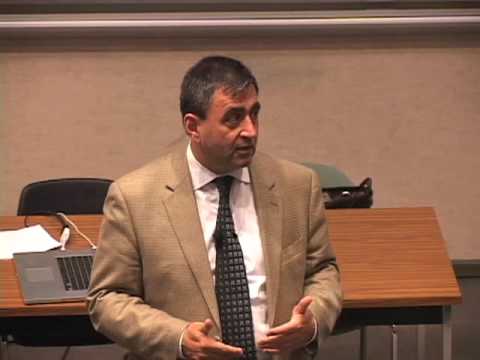
HN commenters recommend it as a long, evidence-backed theory for what changed in the 1970s and why Congress is broken, even when they are unsure they agree.
James D'Angelo argues that the 1970 Legislative Reorganization Act made congressional votes public, opening the door to lobbyists and special interests. He proposes restoring secret voting as a cheap fix for corruption and many social ills.
The Case for Secret Congressional Votes
CRI · Lecture
HN commenters recommend it as a long, evidence-backed theory for what changed in the 1970s and why Congress is broken, even when they are unsure they agree.
Why it's here
Repeatedly recommended in education threads as the definitive talk on why lectures fail and what works better.
Harvard physicist Eric Mazur explains how he realized his students were memorizing rather than understanding, and how he changed his teaching. He presents peer instruction and data showing improved student performance.
Eric Mazur on Peer Instruction and Better Physics Teaching
UMBCtube · Lecture
Repeatedly recommended in education threads as the definitive talk on why lectures fail and what works better.
Why it's here
HN recommends it as career and research advice on choosing important problems and doing first-class work.
Richard Hamming's 1995 recording of his talk 'You and Your Research', drawn from his graduate engineering course. He discusses how great scientists pick important problems and build careers, drawing on his years at Bell Labs.
Richard Hamming: You and Your Research (1995)
securitylectures · Lecture
HN recommends it as career and research advice on choosing important problems and doing first-class work.

Why it's here
HN's most frequent recommendation for a clear, approachable foundation in how LLMs work without heavy math.
Andrej Karpathy's three-hour-plus general-audience deep dive into how ChatGPT-style LLMs are built, covering the full training stack from pretraining to post-training. It also gives mental models for their quirks, like hallucination, and how to use them well.
How ChatGPT-Style LLMs Are Built
Andrej Karpathy · Lecture
HN's most frequent recommendation for a clear, approachable foundation in how LLMs work without heavy math.

Why it's here
HN repeatedly recommends it as the clearest and most correct beginner explanation of monads, with several commenters saying it finally made them click.
Microsoft's Brian Beckman gives an hour-long, whiteboard-style walk through monads, building from function composition and monoids using school-level math. It is aimed at practicing programmers rather than category theorists.
Brian Beckman Explains Monads Without Category Theory
jasonofthel33t · Lecture
HN repeatedly recommends it as the clearest and most correct beginner explanation of monads, with several commenters saying it finally made them click.

Why it's here
HN cites it often in debates on inequality, cost disease and stagnant middle-class income, praising its data-driven approach.
Elizabeth Warren's 2007 Berkeley lecture, when she was a Harvard law professor, on why middle-class families are under growing financial strain. She draws on bankruptcy research to examine rising costs of housing, health care and education.
Elizabeth Warren on the Middle Class's Financial Strain
University of California Television (UCTV) · Lecture
HN cites it often in debates on inequality, cost disease and stagnant middle-class income, praising its data-driven approach.

Why it's here
HN treats it as the definitive explanation of Conway's Law and links it in almost any thread about org structure shaping software.
Casey Muratori's lecture, originally given at the Technical University of Madrid, arguing that Conway's Law is the only viable candidate for a true law of software architecture. He explains how software mimics the organization over time, using examples like Windows' multiple volume controls.
Conway's Law Is Software Architecture's Only True Law
Molly Rocket · Lecture
HN treats it as the definitive explanation of Conway's Law and links it in almost any thread about org structure shaping software.
Why it's here
HN recommends it for productivity, focus and working-from-home threads, since its advice on breaks and mental modes applies beyond studying.
Psychology professor Marty Lobdell gives a one-hour lecture on how to study effectively, covering short focused sessions with breaks, study environment, note-taking and memory techniques. It was aimed at students who cram without improving.
Marty Lobdell's Lecture on Studying Effectively
Pierce College District WA · Lecture
HN recommends it for productivity, focus and working-from-home threads, since its advice on breaks and mental modes applies beyond studying.

Why it's here
HN returns to it constantly in software performance debates as the primer on non-pessimization and why modern software is slow.
Casey Muratori's first refterm lecture lays out philosophies of optimization, distinguishing optimization from non-pessimization, which means avoiding needless work. It uses his fast terminal renderer project to show how fast computers really are.
Casey Muratori on Optimization and Avoiding Needless Work
Molly Rocket · Lecture
HN returns to it constantly in software performance debates as the primer on non-pessimization and why modern software is slow.

Why it's here
HN commenters repeatedly point people to it as the most accessible, developer-friendly introduction to geometric algebra and its use in graphics and physics.
A SIGGRAPH 2019 course on geometric algebra. Charles Gunn gives an intro, then Steven De Keninck gives a programmer-focused course with live examples in ganja.js.
Geometric Algebra for Graphics and Physics
Bivector · Lecture
HN commenters repeatedly point people to it as the most accessible, developer-friendly introduction to geometric algebra and its use in graphics and physics.
Why it's here
HN recommends it as an accessible, widely shared critique of schooling, and cites it in threads on ADHD, creativity and education reform.
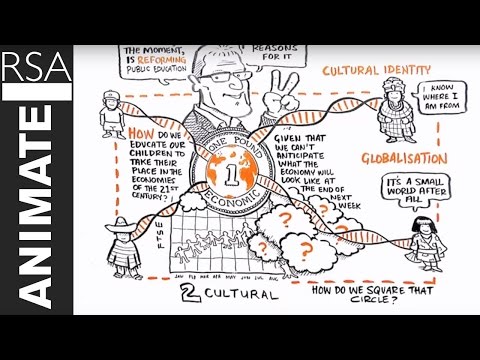
An RSA Animate drawn from a Sir Ken Robinson talk arguing that current education systems are modeled on the industrial age. It discusses divergent thinking, standardization, and how schools disengage kids.
Changing Education Paradigms: Sir Ken Robinson on Schooling
Royal Society of Arts · Lecture
HN recommends it as an accessible, widely shared critique of schooling, and cites it in threads on ADHD, creativity and education reform.

Why it's here
HN frequently calls it the best single video on git because it teaches the underlying data structures.
A lecture from MIT's Missing Semester course covering version control with git. It builds up git from its data model rather than from commands.
MIT Missing Semester: Git's Data Model
Missing Semester · Lecture
HN frequently calls it the best single video on git because it teaches the underlying data structures.

Why it's here
HN commenters repeatedly recommend Barkley's lectures as the best introduction to understanding ADHD.
The first clip from Russell Barkley's 30 Essential Ideas about ADHD series, introducing ADHD as a chronic developmental disability. It is part of a lecture series on the disorder by a leading ADHD researcher.
Russell Barkley: ADHD as a Chronic Developmental Disability
Adhd Videos · Lecture
HN commenters repeatedly recommend Barkley's lectures as the best introduction to understanding ADHD.

Why it's here
HN commenters repeatedly name it as the friendliest entry point to category theory for working programmers.
The first lecture in Bartosz Milewski's category theory series for programmers. It covers the motivation and philosophy behind category theory and why composition matters for handling complexity.
Category Theory 1.1: Motivation and Philosophy
Bartosz Milewski · Lecture
HN commenters repeatedly name it as the friendliest entry point to category theory for working programmers.

Why it's here
HN people with ADHD or ADHD-affected relatives share it as an authoritative, practical talk that helped some seek diagnosis.
A short excerpt from Dr Russell Barkley's 2012 Burnett Lecture on ADHD, focused on treatment. He argues ADHD is a disorder of executive function and self-regulation, and that environments should be designed to compensate.
Russell Barkley on Science-Based ADHD Treatment
Adhd Videos · Lecture
HN people with ADHD or ADHD-affected relatives share it as an authoritative, practical talk that helped some seek diagnosis.

Why it's here
After the 2022 invasion, commenters spread it widely as an eye-opening explanation of Russian mindset, corruption and propaganda, though a few doubt the presenter's rigor.
A 2018 lecture, with subtitles available, by former Finnish intelligence colonel Martti J. Kari on Russian strategic culture. He walks through the historical layers of Russia and explains why the country behaves as it does.
Martti J. Kari: Venäjän strateginen kulttuuri (2018)
fin_topsu · Lecture
After the 2022 invasion, commenters spread it widely as an eye-opening explanation of Russian mindset, corruption and propaganda, though a few doubt the presenter's rigor.

Why it's here
HN regulars treat it as an essential, fun Hofstadter talk for any discussion of concepts, analogy and metaphor.
Douglas Hofstadter's Stanford Presidential Lecture argues that analogy is the core of cognition, illustrating how concepts, categorization and thought arise from analogy-making.
Analogy as the Core of Cognition — Douglas Hofstadter
Stanford · Lecture
HN regulars treat it as an essential, fun Hofstadter talk for any discussion of concepts, analogy and metaphor.
Why it's here
HN cites it as an accessible physician-led review supporting claims about infrared light, mitochondria and morning sun.
Dr. Roger Seheult of MedCram reviews the benefits of sunlight beyond vitamin D, covering the solar spectrum, circadian rhythm, melatonin and infrared light. The lecture runs nearly two hours with timestamps.
Sunlight, Circadian Rhythm, Melatonin and Infrared Light
MedCram - Medical Lectures Explained CLEARLY · Lecture
HN cites it as an accessible physician-led review supporting claims about infrared light, mitochondria and morning sun.

Why it's here
A staple HN recommendation in crypto and Web3 threads as an entertaining, compelling case against blockchain.
James Mickens of Harvard gives a funny lecture at HBS's Future Assembly arguing that blockchains are a very bad idea. He covers their trust, legal and practical shortcomings for real-world problems.
James Mickens: Why Blockchains Are a Bad Idea
HBS Digital Initiative · Lecture
A staple HN recommendation in crypto and Web3 threads as an entertaining, compelling case against blockchain.

Why it's here
Widely recommended as one of the clearest, funniest short explanations of what makes something science.
A short clip of Richard Feynman explaining the scientific method: guess, compute consequences, compare to experiment, and why vague theories like astrology cannot be proven wrong.
Richard Feynman Explains the Scientific Method
seabala · Lecture
Widely recommended as one of the clearest, funniest short explanations of what makes something science.
Why it's here
Several HN commenters credit the lecture series with helping them through depression or personal collapse and recommend it as long-form learning.
The first lecture of Jordan Peterson's 2017 Maps of Meaning course, setting out the Cold War context for his theory of belief and culture. He introduces the narrative structure of culture and archetypal characters for the individual, the known and the unknown.
Jordan Peterson's Maps of Meaning: Context and Background
Jordan B Peterson · Lecture
Several HN commenters credit the lecture series with helping them through depression or personal collapse and recommend it as long-form learning.
Why it's here
HN commenters call it better than the Clean Code book, a must-watch for engineers that changes how they read and write code.
The first lesson of Uncle Bob (Robert C. Martin)'s "Coding Better World Together" series. It makes the case for clean code and for treating software craftsmanship as an ethical and professional responsibility. It runs about 109 minutes.
Clean Code: Coding Better World Together, Lesson 1
UnityCoin · Lecture
HN commenters call it better than the Clean Code book, a must-watch for engineers that changes how they read and write code.
Why it's here
HN regards it as a famous, mesmerizing talk, especially for the point that distant galaxies will become unobservable.
Lawrence Krauss's 2009 talk on the current picture of the universe, how it will end and how it could have come from nothing. It covers the expanding universe, cosmic background radiation and the cosmological constant.
Lawrence Krauss on a Universe From Nothing
Richard Dawkins Foundation for Reason & Science · Lecture
HN regards it as a famous, mesmerizing talk, especially for the point that distant galaxies will become unobservable.

Why it's here
Frequently recommended as the clearest plain-language explanation of what a computer fundamentally is, with at least one commenter saying it changed how they think about programming.
A lecture by Richard Feynman on how computers work, using the analogy of a filing clerk that becomes progressively dumber and faster. It also covers heuristics and how computers handle data and solve problems in finite time.
Richard Feynman Explains Hardware, Software and Heuristics
Muon Ray · Lecture
Frequently recommended as the clearest plain-language explanation of what a computer fundamentally is, with at least one commenter saying it changed how they think about programming.

Why it's here
HN people recommend it as a masterclass in explaining physics clearly without condescension, accessible without formal training.
The first of Richard Feynman's 1964 Cornell Messenger Lectures, The Character of Physical Law, focusing on the law of gravitation. Feynman builds up from planetary motion to the nature of physical laws.
Feynman: The Law of Gravitation and Physical Law
Tinkerin' Thinkers · Lecture
HN people recommend it as a masterclass in explaining physics clearly without condescension, accessible without formal training.