Videos Hacker News keeps recommending, with honest titles.
Invite only: friends here see what each other watch.
Classics

Why it's here
Held up as the landmark demoscene production and a counterpoint to software bloat.
Elevated by Rgba and TBC, the winner of the 4k intro compo at Breakpoint 2009. It is a realtime procedurally generated 3D flythrough with music, all in a 4096-byte executable.
Elevated: 2009 Breakpoint Winner, a 4096-Byte Demo
Demoscene High-Quality Videos (Annikras) · Demo
Held up as the landmark demoscene production and a counterpoint to software bloat.

Why it's here
Recommended whenever APL or array languages come up as the quickest way to see why the paradigm is so striking.
A short Dyalog demonstration building Conway's Game of Life in a single line of APL, step by step. It shows how array operations replace loops.
Conway's Game of Life in One Line of APL
Dyalog · Demo
Recommended whenever APL or array languages come up as the quickest way to see why the paradigm is so striking.

Why it's here
HN treats it as a favorite example of silly but educational computer science, recommended often when threads touch odd storage hacks.
Tom7 (suckerpinch) builds and evaluates a series of absurd hard drives, including storage made from ping packets across the internet. The video accompanies his paper and mixes deep technical hacking with comedic storytelling.
Tom7 Builds Absurd Hard Drives, Including One Using Ping Packets
suckerpinch · Demo
HN treats it as a favorite example of silly but educational computer science, recommended often when threads touch odd storage hacks.
Why it's here
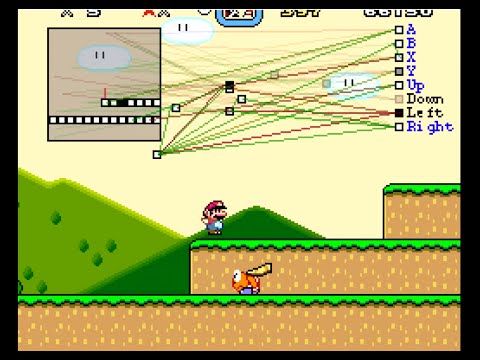
The go-to accessible introduction to neuroevolution and NEAT, praised for crediting prior research.
SethBling shows MarI/O, a program using neural networks and the NEAT genetic algorithm to learn to play Super Mario World. The description links the source code, the paper and background reading.
MarI/O: NEAT Learns to Play Super Mario World
SethBling · Demo
The go-to accessible introduction to neuroevolution and NEAT, praised for crediting prior research.

Why it's here
It is HN's favorite example of extreme code compression, a compelling song and visuals from a program smaller than a tweet.
A Commodore 64 demo by Linus Akesson that fits video and music into 256 bytes, winning the Oldskool 4K Intro compo at Revision 2017. A technical write-up accompanies it.
A 256-Byte Commodore 64 Demo by Linus Åkesson
lftkryo · Demo
It is HN's favorite example of extreme code compression, a compelling song and visuals from a program smaller than a tweet.

Why it's here
HN returns to it again and again as a demonstration of how programmable and composable 1970s systems were compared with today's.
Alan Kay's tribute to Ted Nelson at the Intertwingled festival, presented using a revived Smalltalk-78 system running on emulated 1970s Xerox PARC hardware. It shows live, user-programmable software from that era.
Alan Kay Demonstrates Smalltalk-78 at the Intertwingled Festival
TheTedNelson · Demo
HN returns to it again and again as a demonstration of how programmable and composable 1970s systems were compared with today's.

Why it's here
Loved on HN as a hilarious, brilliant example of hacker-academic work and cited whenever game-playing AI or fuzzing comes up.
Tom7 explains and demos software that learns to play NES games by finding score patterns in memory and then searching for inputs that raise it. It is the video companion to his SIGBOVIK paper.
How Software Learns to Play Classic NES Games
suckerpinch · Demo
Loved on HN as a hilarious, brilliant example of hacker-academic work and cited whenever game-playing AI or fuzzing comes up.

Why it's here
HN treats it as an essential piece of computing history that shows how many modern interface ideas were already solved in 1968.
The full recording of Douglas Engelbart's 1968 demonstration, which introduced the mouse, hypertext, video conferencing, word processing, and real-time collaborative editing. It runs about 100 minutes.
The Mother of All Demos: Douglas Engelbart, 1968
Marcel · Demo
HN treats it as an essential piece of computing history that shows how many modern interface ideas were already solved in 1968.

Why it's here
HN considers it the best experimental rebuttal and clarification of the Veritasium wire debate, with real measurements.
AlphaPhoenix builds a scaled-down version of the Veritasium electricity thought experiment using about a kilometer of wire and an oscilloscope. He measures how the signal actually propagates and explains the result.
Testing How Electricity Signals Travel Through a Kilometer of Wire
AlphaPhoenix · Demo
HN considers it the best experimental rebuttal and clarification of the Veritasium wire debate, with real measurements.

Why it's here
Whenever HN discusses seasonal affective disorder, myopia, or bright home lighting, people point to this as the most convincing buildable example of sunlight-like illumination.
DIY Perks builds a realistic artificial sun for dark winters, using a powerful water-cooled LED, a satellite dish reflector for near-parallel rays, and a scattering layer to mimic the blue sky. The video explains the optics behind why most lamps do not look like sunlight and shows the build and its results.
Building an Artificial Sun for Dark Winter Days
DIY Perks · Demo
Whenever HN discusses seasonal affective disorder, myopia, or bright home lighting, people point to this as the most convincing buildable example of sunlight-like illumination.

Why it's here
HN people point to it as the best demonstration of literate devops, showing documentation and execution woven together in Emacs.
Howard Abrams demonstrates, in an EmacsConf 2015 talk, how he uses org-mode's Babel and Tramp to configure and operate remote servers from a single document. Code blocks, their results and the explanatory text all live together.
Literate DevOps with Emacs Org-Babel and Tramp
Howard Abrams · Demo
HN people point to it as the best demonstration of literate devops, showing documentation and execution woven together in Emacs.

Why it's here
Constantly cited as the canonical example of arbitrary code execution through gameplay and of deep system knowledge among speedrunners.
SethBling uses Super Mario World glitches to inject and run Flappy Bird code on an unmodified SNES, entering it purely with controller inputs. It was the first time a human completed this kind of exploit by hand.
Running Flappy Bird on an Unmodified SNES via Controller Input
SethBling · Demo
Constantly cited as the canonical example of arbitrary code execution through gameplay and of deep system knowledge among speedrunners.

Why it's here
HN recommends it as a quick, compelling look at what Smalltalk tooling feels like, especially for Ruby programmers.
Ruby developer Avdi Grimm gives a seven-minute tour of Pharo Smalltalk's development environment, focusing on tools like search-by-example and the integrated, live coding experience.
Pharo Smalltalk tour for Ruby developers
Avdi Grimm · Demo
HN recommends it as a quick, compelling look at what Smalltalk tooling feels like, especially for Ruby programmers.

Why it's here
HN fans hold it up as a favorite among his videos and an example of gloriously bonkers technical art, and cite it in floating-point discussions.
Tom Murphy (suckerpinch) presents a deliberately trollish computer architecture built on IEEE-754 floating point, using NaN and infinity to define logic gates. He builds working hardware around the idea.
NaN Gates and Flip FLOPS: Floating-Point Computer Hardware
suckerpinch · Demo
HN fans hold it up as a favorite among his videos and an example of gloriously bonkers technical art, and cite it in floating-point discussions.

Why it's here
HN treats him as a master class in salesmanship and live presentation, where how you sell matters more than what you sell.
A short street-level clip of Joe Ades, the New York pitchman who sold vegetable peelers to crowds on the sidewalk. It shows his patter, showmanship and crowd handling in action.
Joe Ades Demonstrates His Vegetable Peeler Sales Pitch
KING OF NEW YORK HACKS · Demo
HN treats him as a master class in salesmanship and live presentation, where how you sell matters more than what you sell.

Why it's here
HN keeps citing it as the standard example of accessible DIY gene engineering and self-experimentation, in threads on gene therapy, CRISPR and biohacking.
The Thought Emporium's host describes making and taking a DIY gene therapy to treat his own lactose intolerance. It uses an AAV virus to deliver DNA coding for the lactose-digesting enzyme, made with biohacker Gabriel Licina's help.
A DIY Gene Therapy for Lactose Intolerance
The Thought Emporium · Demo
HN keeps citing it as the standard example of accessible DIY gene engineering and self-experimentation, in threads on gene therapy, CRISPR and biohacking.

Why it's here
It is the canonical reference for the claim that modern software wastes hardware, and the proof-of-concept behind the Windows Terminal performance debate.
Casey Muratori shows how fast a terminal renderer can run, building a simple reference renderer that handles Unicode and colored text far quicker than Windows Terminal. He argues that common excuses for slow terminals do not hold up.
How Fast Can an Unoptimized Terminal Render?
Molly Rocket · Demo
It is the canonical reference for the claim that modern software wastes hardware, and the proof-of-concept behind the Windows Terminal performance debate.

Why it's here
HN treats it as the classic teardown and the go-to example of over-engineered hardware built without real-world constraints.
AvE tears down the Juicero cold-press juicer, examining its heavily machined parts, electronics and the pricey juice packs. He pokes fun at the product and venture-funded culture along the way.
Juicero Cold-Press Juicer Teardown
AvE · Demo
HN treats it as the classic teardown and the go-to example of over-engineered hardware built without real-world constraints.

Why it's here
HN repeatedly holds it up as the benchmark for what procedural generation and size-coding can achieve in 4K.
Elevated is a 4 kilobyte PC demo by RGBA and TBC from Breakpoint 2009. It fly-throughs a realistic procedurally generated landscape with synthesized music and post-processing, all from a tiny executable.
Elevated: A 4 KB Procedural PC Demo
BUTTONTANG · Demo
HN repeatedly holds it up as the benchmark for what procedural generation and size-coding can achieve in 4K.

Why it's here
HN commenters repeatedly call it among the best magic performances ever, valuing it as acting and craft that stays impressive even once you know the method.
A ten-minute card-magic act by Dani DaOrtiz performed on Penn & Teller: Fool Us in 2022. It is built on timing, misdirection and psychology, and the method defeated the show's hosts.
Dani DaOrtiz Performs Card Magic on Fool Us
dani daortiz · Demo
HN commenters repeatedly call it among the best magic performances ever, valuing it as acting and craft that stays impressive even once you know the method.

Why it's here
HN recommends it as the fastest way to understand what VisiData can do, since seeing it work is clearer than reading about it.
A five-minute lightning demo of VisiData, a terminal tool for exploring and manipulating data. It uses two months of NYC 311 complaint data to drill down, plot points on a virtual map and save selected rows.
VisiData Demo with NYC 311 Complaint Data
Saul Pwanson · Demo
HN recommends it as the fastest way to understand what VisiData can do, since seeing it work is clearer than reading about it.

Why it's here
Repeatedly cited as an inspiring demo of what programming in VR could look like, which led some commenters to buy headsets.
Brian Peiris demonstrates RiftSketch, a web app where you write JavaScript with Three.js while wearing an Oculus Rift and watch the world around you change live. It runs on Firefox builds with WebVR.
RiftSketch: Live JavaScript Coding in Virtual Reality
Brian Peiris · Demo
Repeatedly cited as an inspiring demo of what programming in VR could look like, which led some commenters to buy headsets.

Why it's here
The canonical visual for nested simulation, Turing completeness and self-reference; HN readers call it mind-blowing and reach for it constantly.
A two-minute video of Conway's Game of Life running inside Conway's Game of Life, built from OTCA metapixels and Golly. It zooms smoothly between scales.
Conway's Game of Life Inside Conway's Game of Life
Phillip Bradbury · Demo
The canonical visual for nested simulation, Turing completeness and self-reference; HN readers call it mind-blowing and reach for it constantly.

Why it's here
It is the canonical demo HN people cite for live interactive development and hot reloading, as proof the workflow is real and not smoke and mirrors.
Bruce Hauman live-codes Flappy Bird in ClojureScript in about six minutes, using figwheel to hot-reload changes into the running game. The demo shows game behavior being changed interactively without restarting.
Live-Coding Flappy Bird in ClojureScript
Bruce Hauman · Demo
It is the canonical demo HN people cite for live interactive development and hot reloading, as proof the workflow is real and not smoke and mirrors.

Why it's here
HN recommends it as a beautiful example of what simple rules and compute shaders can produce, and many commenters were inspired by it.
Sebastian Lague explores an ant-inspired algorithm and simulates ant and slime mold behavior, using compute shaders. Source code for both simulations is available.
Ant and Slime Simulations with Compute Shaders
Sebastian Lague · Demo
HN recommends it as a beautiful example of what simple rules and compute shaders can produce, and many commenters were inspired by it.

Why it's here
Repeatedly cited in car touchscreen debates as an elegant, sensible alternative to distracting automotive UIs.
Matthaeus Krenn presents a concept for car touchscreen UI where the screen controls only one thing at a time, designed to suit driving. A tablet prototype accompanies the short demo.
A Car Touchscreen UI Designed for Safer Driving
Matthaeus Krenn · Demo
Repeatedly cited in car touchscreen debates as an elegant, sensible alternative to distracting automotive UIs.

Why it's here
HN readers recommend it as the best introduction to robust-first computing, where randomness and fault tolerance are built into the architecture.
Dave Ackley demonstrates the Demon Horde Sort, an inherently robust sorting machine running in his Movable Feast Machine simulator. This is the uncut version with all details and side thoughts.
Demon Horde Sort: Robust-First Computing
Dave Ackley · Demo
HN readers recommend it as the best introduction to robust-first computing, where randomness and fault tolerance are built into the architecture.

Why it's here
HN people recommend it as an excellent, convincing overview of Emacs for newcomers and skeptics, shown by someone who clearly loves it.
Steve Yegge records himself working in Emacs and shows off about a dozen features in a roughly 45-minute screen capture. It is an informal, enthusiastic tour rather than a structured tutorial.
Steve Yegge's Informal Tour of Emacs
Steve Yegge · Demo
HN people recommend it as an excellent, convincing overview of Emacs for newcomers and skeptics, shown by someone who clearly loves it.
Why it's here
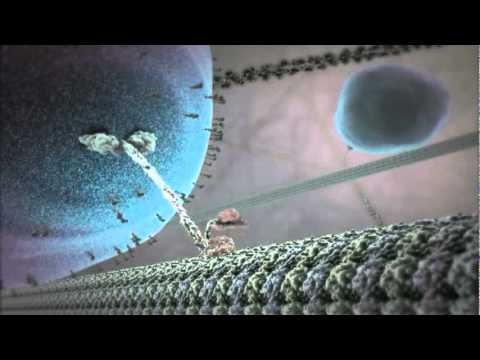
Recommended as a jaw-dropping view of the complexity and machine-like nature of cells.
An award-winning 3D animation by XVIVO for Harvard's BioVisions showing the molecular machinery inside a cell as a white blood cell responds to a stimulus.
The Inner Life of a Cell
XVIVO Scientific Animation · Demo
Recommended as a jaw-dropping view of the complexity and machine-like nature of cells.

Why it's here
HN keeps citing it as proof of how advanced a GC-based systems language and integrated workstation were decades ago, and as a model for what desktop OSes could be.
Eric Bier, a PARC research scientist, demonstrates the Cedar integrated programming environment and language, an evolution of Mesa from Xerox PARC. The demo shows the Tioga editor, garbage collection, and a full graphical workstation environment.
Eric Bier Demonstrates Xerox PARC's Cedar
Computer History Museum · Demo
HN keeps citing it as proof of how advanced a GC-based systems language and integrated workstation were decades ago, and as a model for what desktop OSes could be.

Why it's here
HN commenters love it as a vivid demonstration of terminal history, explaining why tools like ed and the tty echo model work the way they do.
CuriousMarc connects a restored 1930 Model 15 Teletype to a Linux machine and uses it as a terminal, after commenters requested it. The video shows the challenges of linking a 5-bit mechanical device to a modern OS.
Using a 1930 Teletype as a Linux Terminal
CuriousMarc · Demo
HN commenters love it as a vivid demonstration of terminal history, explaining why tools like ed and the tty echo model work the way they do.

Why it's here
HN returns to it as a striking demonstration that core GUI, CAD and constraint-programming ideas existed in the 1960s.
A TV show about Ivan Sutherland's 1963 MIT thesis software Sketchpad, which ran on the TX-2 computer. It shows a light pen drawing, constraints, snapping, scaling and object-style graphics, foundations of GUIs and CAD.
Ivan Sutherland Demonstrates Sketchpad (1963)
Interface Studies · Demo
HN returns to it as a striking demonstration that core GUI, CAD and constraint-programming ideas existed in the 1960s.

Why it's here
Strongly recommended as a beautiful demonstration that APL can be read and reasoned about step by step.
A Dyalog demonstration of developing a Sudoku solver in APL, using an algorithm by Arthur Whitney with performance work by John Scholes. The narration steps through the array-oriented solution.
Building a Sudoku Solver in APL
Dyalog · Demo
Strongly recommended as a beautiful demonstration that APL can be read and reasoned about step by step.

Why it's here
Recommended in threads on ancient games and cuneiform as a charming match with an enthusiastic expert.
Tom Scott plays the Royal Game of Ur against British Museum curator Irving Finkel, who deciphered its rules from a cuneiform tablet. Finkel teaches the game and explains its history as the oldest playable board game.
Tom Scott Plays the Royal Game of Ur with Irving Finkel
The British Museum · Demo
Recommended in threads on ancient games and cuneiform as a charming match with an enthusiastic expert.

Why it's here
HN cites it as the example of a better alternative to whiteboard and fizzbuzz-style interviews.
A live mock programmer interview in which Casey Muratori interviews game developer Shawn McGrath using a less confrontational format devised by Chris Hecker. It gets deep into technical details while showing how the candidate actually thinks and works.
A Technical Mock Interview with Game Developer Shawn McGrath
Molly Rocket · Demo
HN cites it as the example of a better alternative to whiteboard and fizzbuzz-style interviews.
Why it's here
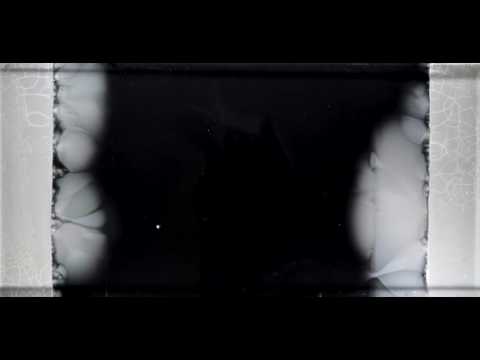
HN links it as a visually striking demonstration of evolution and antibiotic resistance happening in days.
A two-minute time-lapse from the Kishony Lab showing bacteria spreading across a giant petri dish with increasing antibiotic doses, evolving resistance as they go.
Antibiotic Resistance Evolving on a Mega-Plate
Harvard Medical School · Demo
HN links it as a visually striking demonstration of evolution and antibiotic resistance happening in days.

Why it's here
Held up in debugger and tooling threads as an amazing ideal of a tight feedback loop and what debugging could be.
Allan Blomquist demonstrates the internal programming and debugging tools Tomorrow Corporation uses to make games, including live modification of a running game and time-travel debugging.
Tomorrow Corporation's Live Game Debugging Tools
retrogameinternals · Demo
Held up in debugger and tooling threads as an amazing ideal of a tight feedback loop and what debugging could be.
Why it's here
Recommended as the shortest way to grasp Nelson's idea of referential content and how the web could have been different.
Ted Nelson demonstrates Xanadu Space, his software for representing hypertext in three-dimensional space with linked, referenced content fragments.
Ted Nelson Demonstrates Xanadu Space Hypertext
photonhunter · Demo
Recommended as the shortest way to grasp Nelson's idea of referential content and how the web could have been different.

Why it's here
HN holds it up as a showcase of what a stock Amiga 500 can do and as one of the best demos ever in technique and storytelling.
Eon is a demoscene production by The Black Lotus, released at Revision 2019 and designed for an Amiga with OCS chipset, 512 kB chip and 512 kB fast memory. This is the party version, which has some known glitches.
The Black Lotus: Eon Amiga Demo (Revision 2019)
RetroDemoScene · Demo
HN holds it up as a showcase of what a stock Amiga 500 can do and as one of the best demos ever in technique and storytelling.
Why it's here
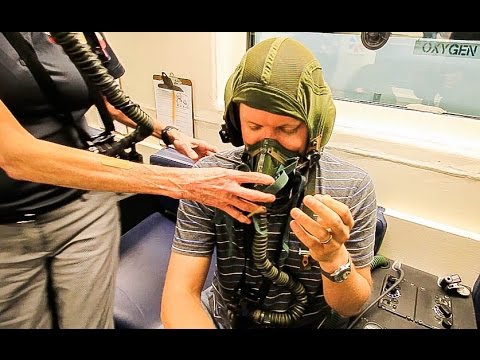
It is the go-to demonstration of how hypoxia silently disables decision making, cited in threads on altitude, flying, diving, CO2 and breathwork.
Destin Sandlin of Smarter Every Day undergoes hypoxia training and experiences his own impaired thinking as oxygen is withdrawn. The video shows how quickly and unnoticeably oxygen deprivation degrades judgment, illustrating why you put your own mask on first.
Hypoxia training shows why you put your mask on first
SmarterEveryDay · Demo
It is the go-to demonstration of how hypoxia silently disables decision making, cited in threads on altitude, flying, diving, CO2 and breathwork.

Why it's here
The go-to demo whenever HN discusses what Lisp machines were like and what modern shells and editors lack.
Symbolics developer Kalman Reti gives a short introductory demo of a Symbolics Lisp Machine running Genera in an emulator. It shows the context-aware command line, typed on-screen objects, and the live-editable system, including swapping in a C-compiled JPEG decoder.
Symbolics Lisp Machine and Genera demo
Kalman Reti · Demo
The go-to demo whenever HN discusses what Lisp machines were like and what modern shells and editors lack.

Why it's here
HN recommends it, with its companion video, as an honest hands-on account of e-ink devices as monitors, including their slow software and limits.
Technology Connections gives first impressions of using an Onyx Boox Max2 e-ink tablet for productivity, including using it as an external display. He shows what the device can and cannot do.
Using an E-Ink Tablet for Productivity: Onyx Boox Max2
Technology Connextras · Demo
HN recommends it, with its companion video, as an honest hands-on account of e-ink devices as monitors, including their slow software and limits.

Why it's here
The go-to demonstration in car-safety debates that old cars were not better, showing crumple zones and a rigid passenger cell at work.
A one-minute IIHS demonstration crash test of a 1959 Chevrolet Bel Air against a 2009 Chevrolet Malibu, showing how much better the modern car protects its occupants.
1959 Chevrolet Bel Air vs. 2009 Chevrolet Malibu Crash Test
IIHS · Demo
The go-to demonstration in car-safety debates that old cars were not better, showing crumple zones and a rigid passenger cell at work.

Why it's here
HN commenters cite it as the clearest look at Zipline's real-world drone operations, especially for medical delivery and the solved noise problem.
Mark Rober visits Zipline and looks at its autonomous delivery drones, including medical and blood deliveries in Rwanda. He demonstrates how the drones' propeller design and cable-lowered delivery pod make them quiet and precise.
Zipline's Autonomous Medical Delivery Drones
Mark Rober · Demo
HN commenters cite it as the clearest look at Zipline's real-world drone operations, especially for medical delivery and the solved noise problem.

Why it's here
HN commenters use it as the standard example of how much a tiny program can do, in contrast to bloated modern software.
A recording of .the .product by Farbrausch, the first-place 64k intro at The Party 2000. It fits an 11-minute 3D demo with music into 64 kilobytes.
Farbrausch's .the .product: An 11-Minute 64K Demo
Demoscene High-Quality Videos (Annikras) · Demo
HN commenters use it as the standard example of how much a tiny program can do, in contrast to bloated modern software.

Why it's here
HN points to it as a favorite teardown, usually when discussing Dyson or how products are engineered and built, with some noting the host was impressed by the engineering.
AvE tears down a roughly $500 Dyson hair dryer, examining how its motor, airflow and electronics fit into a small body. He runs tests along the way and ultimately decides whether the engineering justifies the price.
Dyson Hair Dryer Teardown: Motor, Airflow and Electronics
AvE · Demo
HN points to it as a favorite teardown, usually when discussing Dyson or how products are engineered and built, with some noting the host was impressed by the engineering.

Why it's here
HN points to it as a demonstration of what fast, well-built developer tooling looks like and of why a debugger beats print statements.
Casey Muratori gives a fast tour of the RemedyBG debugger for Windows, which he uses daily. He shows its speed and features, especially the watch window.
A Tour of the RemedyBG Debugger
Molly Rocket · Demo
HN points to it as a demonstration of what fast, well-built developer tooling looks like and of why a debugger beats print statements.

Why it's here
HN users share it as the quick demo that shows what Magit can do, for people unfamiliar with it.
A three-minute Emacs Rocks screencast demonstrating Magit, the Git interface inside Emacs, including staging and other everyday operations.
Magit: Git Operations in Emacs
emacsrocks · Demo
HN users share it as the quick demo that shows what Magit can do, for people unfamiliar with it.