Classics

Why it's here
HN's go-to recommendation for learning linear algebra intuition, repeatedly credited with making concepts click and complementing textbooks.
The first chapter of 3Blue1Brown's Essence of Linear Algebra series, introducing vectors with animated geometric visuals. It begins a series that builds intuition for linear algebra from the basics.
Vectors | The Essence of Linear Algebra
3Blue1Brown · Course
HN's go-to recommendation for learning linear algebra intuition, repeatedly credited with making concepts click and complementing textbooks.

Why it's here
HN recommends it repeatedly as one of the best and most entertaining programming talks, and as the talk that makes the Y combinator click, even for people who do not use Ruby.
Jim Weirich's RubyConf 2012 talk derives the Y combinator step by step, live-coding in Ruby lambdas. It builds up an understanding of functional programming and lambda calculus from first principles.
Deriving the Y Combinator in Ruby
Confreaks · Talk
HN recommends it repeatedly as one of the best and most entertaining programming talks, and as the talk that makes the Y combinator click, even for people who do not use Ruby.

Why it's here
HN repeatedly calls it the best in-depth introduction to IC manufacturing, a sense-of-awe talk by an independent engineer, while wishing for an updated version.
A HOPE09 talk on how modern computer chips are manufactured, from 22nm transistors to ultra-clean fabs and the tricks used to pattern tiny features with light. It frames chipmaking as hacking electrical engineering and physics.
How Modern Computer Chips Are Manufactured
Andor Gafotas · Talk
HN repeatedly calls it the best in-depth introduction to IC manufacturing, a sense-of-awe talk by an independent engineer, while wishing for an updated version.

Why it's here
HN treats it as the canonical, near-universally recommended lecture on giving talks and presentations.
Patrick Winston's long-running MIT lecture on public speaking teaches heuristic rules for talks. It covers how to start, use time and place, boards, props and slides, and how to inform, persuade and finish.
How to Speak: MIT Lecture on Public Speaking
MIT OpenCourseWare · Lecture
HN treats it as the canonical, near-universally recommended lecture on giving talks and presentations.

Why it's here
HN treats it as the best starting point for really understanding backprop and neural nets, because Karpathy explains the why with intuition and builds everything in code.
Andrej Karpathy's first Neural Networks: Zero to Hero lecture, which builds micrograd, a tiny autograd engine, from scratch in Python. It explains backpropagation and neural network training step by step, assuming only basic Python and some high-school calculus.
Building micrograd: Backpropagation from Scratch
Andrej Karpathy · Lecture
HN treats it as the best starting point for really understanding backprop and neural nets, because Karpathy explains the why with intuition and builds everything in code.

Why it's here
HN repeatedly recommends it as a master class in limited-palette pixel art and palette cycling, from an artist behind Loom and Monkey Island.
Mark Ferrari, the LucasArts background artist, explains in a GDC 2016 talk how he draws 8-bit graphics. He covers color cycling and palette shifting to create complex animated scenery without frame animation.
How 8-Bit Graphics Use Color Cycling
GDC Festival of Gaming · Talk
HN repeatedly recommends it as a master class in limited-palette pixel art and palette cycling, from an artist behind Loom and Monkey Island.

Why it's here
It is HN's standard answer to why Python cannot easily get much faster, and is recommended by people who work on JITs and alternative runtimes.
Armin Ronacher, creator of Flask, explains how CPython's internals and C API leak into the language's semantics. Using examples like the complexity of the add operation, he shows why Python is hard to optimize or reimplement.
How CPython Internals Shape Python's Semantics
Видео с мероприятий {speach! · Talk
It is HN's standard answer to why Python cannot easily get much faster, and is recommended by people who work on JITs and alternative runtimes.
Why it's here
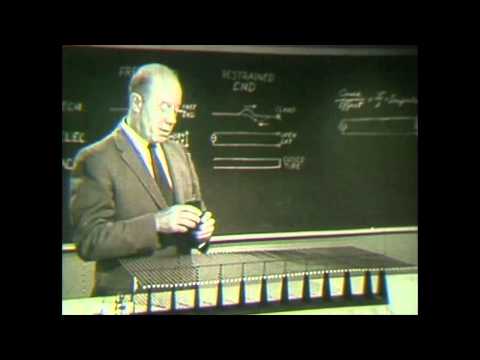
HN repeatedly calls it the clearest introduction to waves and transmission-line behavior, better than modern explainers.
A Bell Labs film in which Dr. J.N. Shive uses a mechanical wave machine to demonstrate reflection, standing waves, resonance and impedance matching. He includes some equations but relies mostly on real-world examples a layperson can follow.
How Waves Reflect, Resonate, and Form Standing Waves
AT&T Tech Channel · Lecture
HN repeatedly calls it the clearest introduction to waves and transmission-line behavior, better than modern explainers.

Why it's here
HN treats it as the definitive, compassionate documentary on why people fall into conspiracy theories.
Dan Olson's 76-minute essay on flat earth belief, built around a hike to a lake to test earth's curvature. It examines the community, how YouTube promoted it, and how it connects to wider conspiracy thinking and QAnon.
In Search of a Flat Earth
Folding Ideas · Documentary
HN treats it as the definitive, compassionate documentary on why people fall into conspiracy theories.
Why it's here
One of the most consistently recommended lecture series on HN, praised as fascinating, funny and eye-opening about human behavior across many scales.
The opening lecture of Robert Sapolsky's Stanford course on Human Behavioral Biology, explaining the course premise and how to avoid categorical thinking. It starts a roughly 25-lecture series on how biology, genes, hormones and environment shape behavior.
Introduction to Human Behavioral Biology
Stanford · Lecture
One of the most consistently recommended lecture series on HN, praised as fascinating, funny and eye-opening about human behavior across many scales.
Why it's here
HN repeatedly recommends it as the best layperson overview of debt, credit and economic cycles.
Ray Dalio's 30-minute animated video explains how the economy works through credit, debt, interest rates, and short- and long-term cycles. It is based on his template for understanding the economy.
How Credit and Debt Drive Economic Cycles
Principles by Ray Dalio · Explainer
HN repeatedly recommends it as the best layperson overview of debt, credit and economic cycles.

Why it's here
HN treats it as a top-tier programming talk for learning refactoring and for the wrong-abstraction principle, recommended repeatedly over a decade.
Sandi Metz takes an ugly section of conditional code and refactors it into a few simple objects, bridging object-oriented theory and practice. The talk includes her take on the Gilded Rose refactoring kata and the idea that duplication is cheaper than the wrong abstraction.
Refactoring Conditionals into Simple Objects
Confreaks · Talk
HN treats it as a top-tier programming talk for learning refactoring and for the wrong-abstraction principle, recommended repeatedly over a decade.
Why it's here
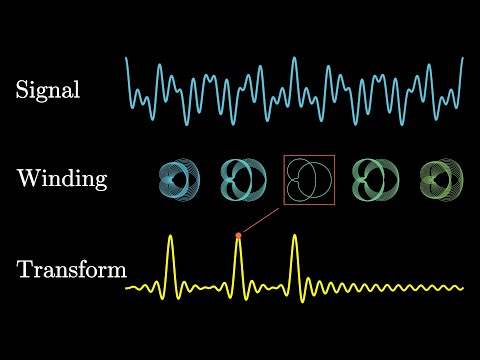
HN's default recommendation for understanding the Fourier transform intuitively; many say it was the explanation that made it click.
3Blue1Brown's animated visual introduction to the Fourier Transform, showing how a signal breaks into frequency components.
What Is the Fourier Transform? A Visual Introduction
3Blue1Brown · Explainer
HN's default recommendation for understanding the Fourier transform intuitively; many say it was the explanation that made it click.

Why it's here
Held up as a marvel of pedagogy and the best explanation of differentials, recommended again and again.
A 1937 GM-produced film explaining how the automobile differential lets wheels turn at different speeds around a corner. It uses clear animations and cutaway demonstrations to build the idea from first principles.
How a Car Differential Works
US Auto Industry · Explainer
Held up as a marvel of pedagogy and the best explanation of differentials, recommended again and again.

Why it's here
It is HN's favorite pitch for Elixir and the BEAM, credited with convincing many people to adopt them.
Sasa Juric explains what makes Erlang and Elixir suited to server-side systems, focusing on the BEAM concurrency model rather than syntax or ecosystem. He demonstrates processes, supervision, and fault tolerance.
How Erlang and Elixir Handle Concurrency and Failure
GOTO Conferences · Talk
It is HN's favorite pitch for Elixir and the BEAM, credited with convincing many people to adopt them.

Why it's here
Repeatedly called the best way to understand ADHD, and recommended to anyone before commenting on it.
Dr. Russell Barkley's roughly three-hour lecture on ADHD for parents of affected children. It explains what ADHD is and how the ADHD brain differs.
Understanding ADHD: A Lecture for Parents
Jason Salotti · Lecture
Repeatedly called the best way to understand ADHD, and recommended to anyone before commenting on it.

Why it's here
HN treats it as the canonical talk on software complexity, shared constantly and recommended to every programmer regardless of language.
Rich Hickey's Strange Loop 2011 keynote distinguishing 'simple' (not intertwined) from 'easy' (familiar or near at hand). It argues that software complexity comes from complecting things and that we should pick simple constructs.
Simple Made Easy: Avoiding Complexity in Software
Strange Loop Conference · Talk
HN treats it as the canonical talk on software complexity, shared constantly and recommended to every programmer regardless of language.

Why it's here
HN commenters repeatedly recommend it as the talk that finally made quantum mechanics click, especially for programmers.
Ron Garret's Google Tech Talk argues that quantum mechanics is no harder to understand than relativity and that popular accounts wrongly rely on the Copenhagen interpretation. He presents measurement as entanglement and explains phenomena like the quantum eraser.
Quantum Mechanics, Measurement, and the Quantum Eraser
Google TechTalks · Talk
HN commenters repeatedly recommend it as the talk that finally made quantum mechanics click, especially for programmers.
Why it's here
HN treats it as the standard short summary of how power and political incentives work, applied to governments, companies and workplaces.
CGP Grey's animated adaptation of The Dictator's Handbook, explaining how rulers stay in power by keeping a small group of key supporters happy rather than ruling fairly. It lays out selectorate theory and how resources shape regimes.
How Rulers Stay in Power: Selectorate Theory
CGP Grey · Explainer
HN treats it as the standard short summary of how power and political incentives work, applied to governments, companies and workplaces.
Why it's here
HN users repeatedly say it changed how they think about writing, calling it a masterclass useful far beyond academia.
Larry McEnerney of the University of Chicago Writing Program gives a graduate-student session on writing effectively. His core idea is that readers care about value to them, not the writer's thinking process.
The Craft of Writing Effectively
UChicago Social Sciences · Lecture
HN users repeatedly say it changed how they think about writing, calling it a masterclass useful far beyond academia.

Why it's here
HN commenters repeatedly name it as the best explanation of the JS event loop and the first thing to watch before tackling async code.
Philip Roberts explains the JavaScript event loop, call stack, callbacks and asynchronous behavior with live visualizations using a tool he built. It demystifies terms like non-blocking and single-threaded.
How the JavaScript Event Loop Works
JSConf · Talk
HN commenters repeatedly name it as the best explanation of the JS event loop and the first thing to watch before tackling async code.
Why it's here
HN treats it as the standard first stop for learning neural networks, praised for making the math intuitive.
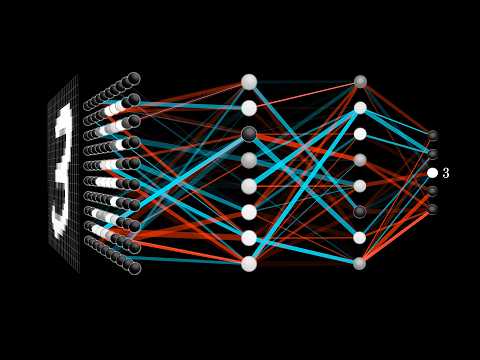
3Blue1Brown's first chapter on deep learning explains what neurons and layers are and the math underlying a basic neural network, using handwritten digit recognition with visual animations.
What Is a Neural Network? A Visual Introduction
3Blue1Brown · Explainer
HN treats it as the standard first stop for learning neural networks, praised for making the math intuitive.
Why it's here
HN's go-to recommendation for colormap and color-perception questions; commenters call it funny, brief, clear and a favorite talk.
SciPy 2015 talk by Nathaniel Smith and Stefan van der Walt on choosing a new default colormap for Matplotlib. It covers why Jet misleads, how perceptual color spaces work, and how viridis was designed.
How Matplotlib's Viridis Colormap Was Designed
Enthought · Talk
HN's go-to recommendation for colormap and color-perception questions; commenters call it funny, brief, clear and a favorite talk.

Why it's here
HN commenters repeatedly say it changed how they hear political speech and recommend it for understanding why opponents are not simply stupid.
Cognitive scientist George Lakoff lectures on how political debates are framed through language and metaphors tied to values, and on the moral worldviews behind progressive and conservative politics. It was given in 2005 at UC San Diego.
George Lakoff on Moral Politics and Political Framing
University of California Television (UCTV) · Lecture
HN commenters repeatedly say it changed how they hear political speech and recommend it for understanding why opponents are not simply stupid.

Why it's here
HN's default recommendation for a friendly, thorough introduction to heat pumps and why they are so efficient.
Technology Connections explains how heat pumps work as reversed air conditioners and why they can deliver several times the heat of resistive heating per unit of energy. It also tackles common myths such as poor cold-weather performance.
Heat Pumps: How They Work and Why They Use Less Energy
Technology Connections · Explainer
HN's default recommendation for a friendly, thorough introduction to heat pumps and why they are so efficient.

Why it's here
HN recommends it often as an entertaining and authentic dramatization of Sinclair versus Acorn, the story from which ARM grew.
Micro Men is a 2009 BBC comic drama about the early 1980s British home computer boom. It follows the rivalry between Clive Sinclair and Acorn founder Chris Curry over the BBC Micro contract and the ZX Spectrum.
Micro Men: Sinclair, Acorn and the 1980s British Computer Boom
gimpymoo · Documentary
HN recommends it often as an entertaining and authentic dramatization of Sinclair versus Acorn, the story from which ARM grew.

Why it's here
HN repeatedly calls it one of the best math and graphics explainers on YouTube, praised for bridging game dev and math.
Freya Holmer explains how Bezier curves work, from the helper-line construction to their uses in animation, text rendering and shapes. It uses visuals from her Unity Shapes plugin and was a SoME1 contest winner.
How Bézier Curves Work and Where They Are Used
Freya Holmér · Explainer
HN repeatedly calls it one of the best math and graphics explainers on YouTube, praised for bridging game dev and math.
Why it's here
HN recommends it often and strongly as an eye-opening account of marketing psychology and the engineering of consumer society.
Adam Curtis' multi-part documentary on how Freud's ideas and Edward Bernays' public relations shaped consumer culture and political control. It argues that business and government learned to manufacture desires.
The Century of the Self: Freud, PR and Consumer Culture
David Lessig · Documentary
HN recommends it often and strongly as an eye-opening account of marketing psychology and the engineering of consumer society.
Why it's here
The most-recommended balanced take on systemd, from a BSD perspective, handed to anyone caught up in the systemd debate.
FreeBSD developer Benno Rice traces the history of init and bootstrap systems at linux.conf.au 2019 to explain why systemd was seen as necessary and why it provokes such strong reactions. He also discusses why change is scary.
Why systemd Was Created and Why It Is Controversial
linux.conf.au · Talk
The most-recommended balanced take on systemd, from a BSD perspective, handed to anyone caught up in the systemd debate.

Why it's here
The most recommended introduction to Svelte, credited with sparking its adoption.
Svelte creator Rich Harris explains moving reactivity into the compiler and language rather than tracking state at runtime, with a history of spreadsheets as reactive systems and comparisons to React.
Rethinking Reactivity: Svelte's Compiler-Based Approach
You Gotta Love Frontend · Talk
The most recommended introduction to Svelte, credited with sparking its adoption.

Why it's here
HN repeatedly recommends it as a talk that changed how people model data, with ideas that apply well beyond Elm to any typed language.
Richard Feldman's elm-conf talk on designing models so that bugs from impossible application states cannot occur, using Elm's compiler and types. It demonstrates techniques for making invalid states unrepresentable.
Making Impossible States Impossible with Elm's Types
elm-conf · Talk
HN repeatedly recommends it as a talk that changed how people model data, with ideas that apply well beyond Elm to any typed language.

Why it's here
HN commenters push it, often forcefully, as the video to watch to see what factory farming really involves, and some say it changed their diet.
Dominion is a two-hour documentary using drones and hidden cameras to expose conditions in animal agriculture, including food, clothing, entertainment and research. It questions humanity's dominion over animals.
Dominion: Hidden-Camera Footage of Animal Agriculture
Farm Transparency Project · Documentary
HN commenters push it, often forcefully, as the video to watch to see what factory farming really involves, and some say it changed their diet.

Why it's here
HN calls it the gold-standard debunking of audiophile myths and the stair-step misconception, and recommends it as a primer on digital audio.
Monty Montgomery of Xiph.org gives real-time demonstrations of sampling, quantization, bit depth and dither using real audio equipment, including both digital analysis tools and vintage analog bench gear. It shows that sampled audio is not stair-stepped and corrects common misconceptions about digital audio.
Digital Audio: Sampling, Quantization, Bit Depth and Dither
FL Studio · Explainer
HN calls it the gold-standard debunking of audiophile myths and the stair-step misconception, and recommends it as a primer on digital audio.

Why it's here
Held up as a legendary deep dive into game internals, explained lucidly and with humor, and a gateway to the channel.
Pannenkoek2012's commentated tool-assisted Super Mario 64 run collecting the Watch for Rolling Rocks star with half an A press, using parallel universes and QPU movement. The video is marked outdated in favor of a newer version.
SM64 Rolling Rocks Star with 0.5 A Presses (Outdated)
pannenkoek2012 · Explainer
Held up as a legendary deep dive into game internals, explained lucidly and with humor, and a gateway to the channel.

Why it's here
HN repeatedly recommends the series it launched as the best way to understand how a CPU works, praised for Eater's clear teaching.
Ben Eater's short update announcing his plan to build another 8-bit computer from scratch on camera. It kicks off the breadboard computer series that became widely known.
Ben Eater Announces a New 8-Bit Computer Build
Ben Eater
HN repeatedly recommends the series it launched as the best way to understand how a CPU works, praised for Eater's clear teaching.

Why it's here
Recommended again and again as the best accessible overview of fusion physics, useful for judging fusion announcements and understanding why high-temperature superconducting magnets matter.
Zach Hartwig of MIT introduces the key concepts of magnetic fusion energy and the state of fusion research. He then presents MIT's proposed pathway of using high-field superconducting magnets to build smaller, cheaper tokamaks on a climate-relevant timescale.
MIT's Pathway to Fusion Energy: High-Field Tokamaks
MIT Plasma Science and Fusion Center · Lecture
Recommended again and again as the best accessible overview of fusion physics, useful for judging fusion announcements and understanding why high-temperature superconducting magnets matter.
Why it's here
HN returns to it repeatedly as the best single introduction to understanding clinical depression.
Stanford professor Robert Sapolsky lectures on depression as a real biological disease. He covers its biological and psychological causes, how it differs from ordinary sadness, and ideas such as learned helplessness. He ties these together into one account.
Robert Sapolsky: The Biology and Psychology of Depression
Stanford · Lecture
HN returns to it repeatedly as the best single introduction to understanding clinical depression.

Why it's here
It is the go-to recommendation for anyone who wants to genuinely understand Bezier curves and splines, and commenters repeatedly call it one of the best programming-related educational videos.
Freya Holmer's 74-minute video essay on splines, covering Bezier curves, B-splines, derivatives and the different levels of continuity (C0, C1, C2), built with custom animation tools. She notes she did not cover non-uniform splines.
Splines: Bézier Curves, B-Splines and Continuity
Freya Holmér · Explainer
It is the go-to recommendation for anyone who wants to genuinely understand Bezier curves and splines, and commenters repeatedly call it one of the best programming-related educational videos.
Why it's here
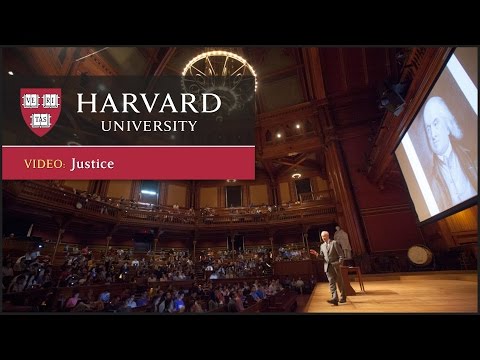
One of the most frequently recommended online lecture series on HN, praised for giving people vocabulary to examine ethical positions and for Sandel's skilled teaching.
The first episode of Michael Sandel's Harvard course on moral reasoning, opening with the trolley problem and the choice between killing one to save five. Sandel draws out student arguments and introduces utilitarian and other approaches to justice.
Justice: The Moral Side of Murder | Harvard Lecture 1
Harvard University · Lecture
One of the most frequently recommended online lecture series on HN, praised for giving people vocabulary to examine ethical positions and for Sandel's skilled teaching.

Why it's here
A perennial HN recommendation, brought up whenever sampling, copyright or music history comes up, often described as a must-watch.
Nate Harrison's 2004 video history of the Amen Break, a six-second drum sample from a 1969 b-side that became the basis of hip-hop sampling, jungle and drum and bass. It is also a meditation on cultural ownership and creativity.
The Amen Break: Sampling, Copyright and Musical Creativity
Landon Proctor · Documentary
A perennial HN recommendation, brought up whenever sampling, copyright or music history comes up, often described as a must-watch.
Why it's here
HN repeatedly recommends it as an entertaining, mind-opening talk on allocator design and composable generic programming.
Andrei Alexandrescu's CppCon 2015 talk argues that std::allocator is badly designed. He proposes building high-performance allocators from small composable, templated pieces.
Why std::allocator Is Badly Designed (and What to Use Instead)
CppCon · Talk
HN repeatedly recommends it as an entertaining, mind-opening talk on allocator design and composable generic programming.

Why it's here
HN recommends it as the best readily available interview with Simons, notable for his emphasis on luck and a humble approach to success.
The full-length Numberphile interview with mathematician and hedge fund founder Jim Simons. He discusses his path from mathematics and codebreaking to founding Renaissance Technologies, his use of algorithms in markets, and his philanthropy.
Jim Simons on Mathematics, Renaissance Technologies and Luck
Numberphile2 · Interview
HN recommends it as the best readily available interview with Simons, notable for his emphasis on luck and a humble approach to success.

Why it's here
Praised as a brilliant, deadpan and inventive hardware hack, and a good starting point for Tom7's videos.
Tom Murphy (suckerpinch) shows 'reverse emulation', using a Raspberry Pi in an NES cartridge to give an unmodified NES new abilities such as playing SNES games. The video starts in a strange way and gets stranger.
Reverse-Emulating the NES with a Raspberry Pi Cartridge
suckerpinch · Talk
Praised as a brilliant, deadpan and inventive hardware hack, and a good starting point for Tom7's videos.
Why it's here
The most-linked YouTube video on HN, recommended as an in-depth explanation of fructose metabolism.
Robert Lustig of UCSF lectures on the biochemistry of sugar, arguing that fructose and lack of fiber drive the obesity epidemic via insulin. It is the widely viewed 90-minute talk that popularized the anti-sugar case.
Robert Lustig: Sugar, Fructose and the Obesity Epidemic
University of California Television (UCTV) · Lecture
The most-linked YouTube video on HN, recommended as an in-depth explanation of fructose metabolism.
Why it's here
It is the go-to talk HN commenters recommend to anyone asking about bootstrapping, SaaS pricing, or choosing bootstrapping over VC.
Jason Cohen's MicroConf talk on designing a bootstrapped business by starting from your own strengths, goals and constraints. He works backward to the business model, pricing, market and product that fit, with practical points like annual prepay and pricing tiers.
Designing a Bootstrapped Business Around Your Constraints
Rob Walling · Talk
It is the go-to talk HN commenters recommend to anyone asking about bootstrapping, SaaS pricing, or choosing bootstrapping over VC.

Why it's here
Frequently recommended in autonomous vehicle and Waymo threads as the main counterargument, a long but worthwhile video essay on how self-driving cars could affect cities.
Not Just Bikes argues that self-driving cars will worsen sprawl and car dependence and harm cities. The video compares car-centered and people-centered urban design and weighs what cities should do instead.
How Self-Driving Cars Could Worsen Sprawl and Car Dependence
Not Just Bikes · Commentary
Frequently recommended in autonomous vehicle and Waymo threads as the main counterargument, a long but worthwhile video essay on how self-driving cars could affect cities.

Why it's here
HN calls it mandatory viewing on the AGC, praising the speaker's enthusiasm and the clear account of restartable, robust software design.
Robert Wills of TNMoC explains the Apollo Guidance Computer hardware and software, then walks through the Apollo 11 landing procedure step by step, including the 1202 alarms.
Apollo Guidance Computer: Hardware, Software and Apollo 11 Landing
TNMoC · Lecture
HN calls it mandatory viewing on the AGC, praising the speaker's enthusiasm and the clear account of restartable, robust software design.

Why it's here
HN returns to it for years as an inspirational talk to send to graduates, founders and anyone at a career crossroads.
Steve Jobs's 2005 Stanford commencement address, built around three stories: connecting the dots, love and loss including being fired from Apple, and death. It is a 15-minute talk on finding work you love.
Steve Jobs' 2005 Stanford Commencement Address
JoshuaG · Talk
HN returns to it for years as an inspirational talk to send to graduates, founders and anyone at a career crossroads.