Videos Hacker News keeps recommending, with honest titles.
Invite only: friends here see what each other watch.
Classics

Why it's here
HN recommends it repeatedly as one of the best and most entertaining programming talks, and as the talk that makes the Y combinator click, even for people who do not use Ruby.
Jim Weirich's RubyConf 2012 talk derives the Y combinator step by step, live-coding in Ruby lambdas. It builds up an understanding of functional programming and lambda calculus from first principles.
Deriving the Y Combinator in Ruby
Confreaks · Talk
HN recommends it repeatedly as one of the best and most entertaining programming talks, and as the talk that makes the Y combinator click, even for people who do not use Ruby.

Why it's here
HN repeatedly calls it the best in-depth introduction to IC manufacturing, a sense-of-awe talk by an independent engineer, while wishing for an updated version.
A HOPE09 talk on how modern computer chips are manufactured, from 22nm transistors to ultra-clean fabs and the tricks used to pattern tiny features with light. It frames chipmaking as hacking electrical engineering and physics.
How Modern Computer Chips Are Manufactured
Andor Gafotas · Talk
HN repeatedly calls it the best in-depth introduction to IC manufacturing, a sense-of-awe talk by an independent engineer, while wishing for an updated version.

Why it's here
HN repeatedly recommends it as a master class in limited-palette pixel art and palette cycling, from an artist behind Loom and Monkey Island.
Mark Ferrari, the LucasArts background artist, explains in a GDC 2016 talk how he draws 8-bit graphics. He covers color cycling and palette shifting to create complex animated scenery without frame animation.
How 8-Bit Graphics Use Color Cycling
GDC Festival of Gaming · Talk
HN repeatedly recommends it as a master class in limited-palette pixel art and palette cycling, from an artist behind Loom and Monkey Island.

Why it's here
It is HN's standard answer to why Python cannot easily get much faster, and is recommended by people who work on JITs and alternative runtimes.
Armin Ronacher, creator of Flask, explains how CPython's internals and C API leak into the language's semantics. Using examples like the complexity of the add operation, he shows why Python is hard to optimize or reimplement.
How CPython Internals Shape Python's Semantics
Видео с мероприятий {speach! · Talk
It is HN's standard answer to why Python cannot easily get much faster, and is recommended by people who work on JITs and alternative runtimes.

Why it's here
HN treats it as a top-tier programming talk for learning refactoring and for the wrong-abstraction principle, recommended repeatedly over a decade.
Sandi Metz takes an ugly section of conditional code and refactors it into a few simple objects, bridging object-oriented theory and practice. The talk includes her take on the Gilded Rose refactoring kata and the idea that duplication is cheaper than the wrong abstraction.
Refactoring Conditionals into Simple Objects
Confreaks · Talk
HN treats it as a top-tier programming talk for learning refactoring and for the wrong-abstraction principle, recommended repeatedly over a decade.

Why it's here
It is HN's favorite pitch for Elixir and the BEAM, credited with convincing many people to adopt them.
Sasa Juric explains what makes Erlang and Elixir suited to server-side systems, focusing on the BEAM concurrency model rather than syntax or ecosystem. He demonstrates processes, supervision, and fault tolerance.
How Erlang and Elixir Handle Concurrency and Failure
GOTO Conferences · Talk
It is HN's favorite pitch for Elixir and the BEAM, credited with convincing many people to adopt them.

Why it's here
HN treats it as the canonical talk on software complexity, shared constantly and recommended to every programmer regardless of language.
Rich Hickey's Strange Loop 2011 keynote distinguishing 'simple' (not intertwined) from 'easy' (familiar or near at hand). It argues that software complexity comes from complecting things and that we should pick simple constructs.
Simple Made Easy: Avoiding Complexity in Software
Strange Loop Conference · Talk
HN treats it as the canonical talk on software complexity, shared constantly and recommended to every programmer regardless of language.

Why it's here
HN commenters repeatedly recommend it as the talk that finally made quantum mechanics click, especially for programmers.
Ron Garret's Google Tech Talk argues that quantum mechanics is no harder to understand than relativity and that popular accounts wrongly rely on the Copenhagen interpretation. He presents measurement as entanglement and explains phenomena like the quantum eraser.
Quantum Mechanics, Measurement, and the Quantum Eraser
Google TechTalks · Talk
HN commenters repeatedly recommend it as the talk that finally made quantum mechanics click, especially for programmers.

Why it's here
HN commenters repeatedly name it as the best explanation of the JS event loop and the first thing to watch before tackling async code.
Philip Roberts explains the JavaScript event loop, call stack, callbacks and asynchronous behavior with live visualizations using a tool he built. It demystifies terms like non-blocking and single-threaded.
How the JavaScript Event Loop Works
JSConf · Talk
HN commenters repeatedly name it as the best explanation of the JS event loop and the first thing to watch before tackling async code.
Why it's here
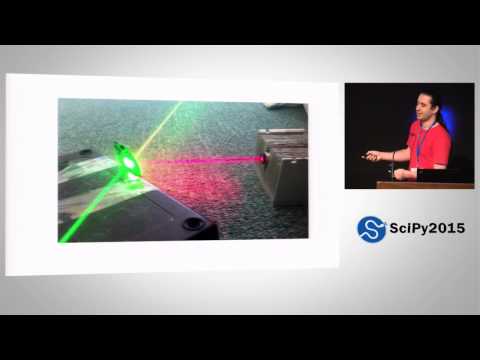
HN's go-to recommendation for colormap and color-perception questions; commenters call it funny, brief, clear and a favorite talk.
SciPy 2015 talk by Nathaniel Smith and Stefan van der Walt on choosing a new default colormap for Matplotlib. It covers why Jet misleads, how perceptual color spaces work, and how viridis was designed.
How Matplotlib's Viridis Colormap Was Designed
Enthought · Talk
HN's go-to recommendation for colormap and color-perception questions; commenters call it funny, brief, clear and a favorite talk.
Why it's here
The most-recommended balanced take on systemd, from a BSD perspective, handed to anyone caught up in the systemd debate.
FreeBSD developer Benno Rice traces the history of init and bootstrap systems at linux.conf.au 2019 to explain why systemd was seen as necessary and why it provokes such strong reactions. He also discusses why change is scary.
Why systemd Was Created and Why It Is Controversial
linux.conf.au · Talk
The most-recommended balanced take on systemd, from a BSD perspective, handed to anyone caught up in the systemd debate.

Why it's here
The most recommended introduction to Svelte, credited with sparking its adoption.
Svelte creator Rich Harris explains moving reactivity into the compiler and language rather than tracking state at runtime, with a history of spreadsheets as reactive systems and comparisons to React.
Rethinking Reactivity: Svelte's Compiler-Based Approach
You Gotta Love Frontend · Talk
The most recommended introduction to Svelte, credited with sparking its adoption.

Why it's here
HN repeatedly recommends it as a talk that changed how people model data, with ideas that apply well beyond Elm to any typed language.
Richard Feldman's elm-conf talk on designing models so that bugs from impossible application states cannot occur, using Elm's compiler and types. It demonstrates techniques for making invalid states unrepresentable.
Making Impossible States Impossible with Elm's Types
elm-conf · Talk
HN repeatedly recommends it as a talk that changed how people model data, with ideas that apply well beyond Elm to any typed language.
Why it's here
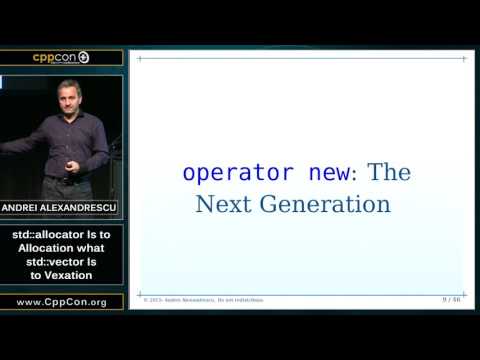
HN repeatedly recommends it as an entertaining, mind-opening talk on allocator design and composable generic programming.
Andrei Alexandrescu's CppCon 2015 talk argues that std::allocator is badly designed. He proposes building high-performance allocators from small composable, templated pieces.
Why std::allocator Is Badly Designed (and What to Use Instead)
CppCon · Talk
HN repeatedly recommends it as an entertaining, mind-opening talk on allocator design and composable generic programming.

Why it's here
Praised as a brilliant, deadpan and inventive hardware hack, and a good starting point for Tom7's videos.
Tom Murphy (suckerpinch) shows 'reverse emulation', using a Raspberry Pi in an NES cartridge to give an unmodified NES new abilities such as playing SNES games. The video starts in a strange way and gets stranger.
Reverse-Emulating the NES with a Raspberry Pi Cartridge
suckerpinch · Talk
Praised as a brilliant, deadpan and inventive hardware hack, and a good starting point for Tom7's videos.
Why it's here
It is the go-to talk HN commenters recommend to anyone asking about bootstrapping, SaaS pricing, or choosing bootstrapping over VC.
Jason Cohen's MicroConf talk on designing a bootstrapped business by starting from your own strengths, goals and constraints. He works backward to the business model, pricing, market and product that fit, with practical points like annual prepay and pricing tiers.
Designing a Bootstrapped Business Around Your Constraints
Rob Walling · Talk
It is the go-to talk HN commenters recommend to anyone asking about bootstrapping, SaaS pricing, or choosing bootstrapping over VC.

Why it's here
HN returns to it for years as an inspirational talk to send to graduates, founders and anyone at a career crossroads.
Steve Jobs's 2005 Stanford commencement address, built around three stories: connecting the dots, love and loss including being fired from Apple, and death. It is a 15-minute talk on finding work you love.
Steve Jobs' 2005 Stanford Commencement Address
JoshuaG · Talk
HN returns to it for years as an inspirational talk to send to graduates, founders and anyone at a career crossroads.
Why it's here
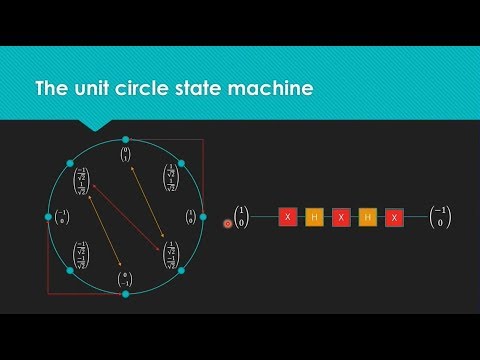
It is HN's most frequently recommended starting point for quantum computing because it avoids pop-science hand-waving and needs only basic linear algebra.
An 88-minute Microsoft Research talk that explains how quantum computers beat classical ones using basic linear algebra, qubits, superposition and gates. It works through the Deutsch oracle problem and ends with entanglement, teleportation and a live demo.
Quantum Computing for Computer Scientists
Microsoft Research · Talk
It is HN's most frequently recommended starting point for quantum computing because it avoids pop-science hand-waving and needs only basic linear algebra.

Why it's here
The go-to recommendation on game feel and polish, cited by HN as one of the best talks for anyone making interactive things feel good.
Martin Jonasson and Petri Purho take a bland Breakout clone and add layer after layer of 'juice' such as easing, particles, screen shake and sound until it feels alive. A live demo makes the effect of small feedback details obvious.
Making Breakout Feel Good with Juice, Feedback and Polish
grapefrukt · Talk
The go-to recommendation on game feel and polish, cited by HN as one of the best talks for anyone making interactive things feel good.

Why it's here
HN returns to it for years as an elegant introduction to writing a lexer that is easy to follow even without a parsing background.
Rob Pike shows how the Go text/template lexer is built, using state functions, goroutines and channels. The talk was given at a Google Technology User Group in Sydney in 2011.
Rob Pike Builds a Go Lexer with State Functions
GoogleFOSSSydney · Talk
HN returns to it for years as an elegant introduction to writing a lexer that is easy to follow even without a parsing background.

Why it's here
HN repeatedly recommends it as an amazing talk that derives the essence of Lisp and shows miniKanren-style program synthesis.
William Byrd presents at Papers We Love NYC on what he calls the most beautiful program ever written, a Lisp interpreter written in Lisp. He walks through the metacircular interpreter and related ideas, and demos relational programming and program synthesis near the end.
William Byrd Explains a Lisp Interpreter Written in Lisp
PapersWeLove · Talk
HN repeatedly recommends it as an amazing talk that derives the essence of Lisp and shows miniKanren-style program synthesis.

Why it's here
HN regularly calls it mind-blowing and recommends it as an introduction to Levin's work on bioelectricity and regeneration.
Michael Levin's NeurIPS 2018 talk on bioelectric computation outside the nervous system, showing how cell electrical networks shape development and regeneration. It covers morphological information processing in living tissue.
Michael Levin: Bioelectric Computation in Regeneration
The Artificial Intelligence Channel · Talk
HN regularly calls it mind-blowing and recommends it as an introduction to Levin's work on bioelectricity and regeneration.

Why it's here
HN treats it as the canonical talk on simulation testing and a mind-blowing example of how far rigorous testing can go.
Will Wilson of FoundationDB explains how the team tested their distributed database using deterministic simulation. By running the whole system in a simulator with injected faults and reproducible seeds, they could find rare concurrency and network bugs.
Testing Distributed Systems with Deterministic Simulation
Strange Loop Conference · Talk
HN treats it as the canonical talk on simulation testing and a mind-blowing example of how far rigorous testing can go.

Why it's here
HN repeatedly recommends it as the deepest public look at how iCloud Keychain and Apple's device and cloud security are designed.
Apple security head Ivan Krstic gives a Black Hat 2016 talk on iOS security, covering HomeKit, Auto Unlock and iCloud Keychain. He explains key hierarchies and how data can stay safe even in adversarial clouds.
iOS Security: HomeKit, Auto Unlock and iCloud Keychain
Black Hat · Talk
HN repeatedly recommends it as the deepest public look at how iCloud Keychain and Apple's device and cloud security are designed.

Why it's here
HN repeatedly calls it the best talk on testing, and many say it changed how they approach tests, mocks and the meaning of a unit.
Ian Cooper's DevTernity talk revisits Kent Beck's original TDD ideas and shows where misunderstandings crept in. It argues tests should target behaviors through public interfaces rather than implementation details, so suites support refactoring instead of resisting it.
TDD: Test Behaviors Through Public Interfaces
DevTernity Conference · Talk
HN repeatedly calls it the best talk on testing, and many say it changed how they approach tests, mocks and the meaning of a unit.
Why it's here
It is HN's go-to recommendation for the case that programming environments should give instant feedback, and it appears in nearly every thread on live coding, visual programming or developer tools.
Bret Victor's talk at CUSEC 2012 in which he argues that creators need immediate feedback and should organize their work around a guiding principle. He demonstrates live-coding and animation tools that show results as you type, and describes his own principle that creators must see what they are making.
Inventing on Principle: Immediate Feedback in Programming Tools
Rui Oliveira · Talk
It is HN's go-to recommendation for the case that programming environments should give instant feedback, and it appears in nearly every thread on live coding, visual programming or developer tools.
Why it's here
HN repeatedly names it the best resource on API design, a staple answer to any 'how do I design an API' question.
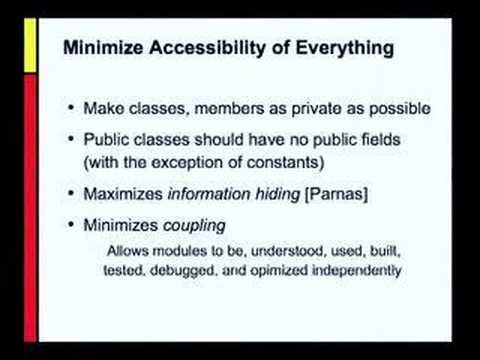
Joshua Bloch's Google Tech Talk on how to design good APIs and why it matters, with concrete principles and examples. It treats every programmer as an occasional API designer.
How to Design a Good API and Why It Matters
Google TechTalks · Talk
HN repeatedly names it the best resource on API design, a staple answer to any 'how do I design an API' question.
Why it's here
HN commenters cite it as the talk that convinced them of immutability and functional programming.
Rich Hickey's JaxConf 2012 keynote examines what values are and why immutable values matter as information systems grow more complex and data gets bigger. It contrasts places with values and builds the case for immutability.
Rich Hickey on Values and Immutability
InfoQ · Talk
HN commenters cite it as the talk that convinced them of immutability and functional programming.

Why it's here
HN treats it as a classic, near-mandatory talk on how programming tools and paradigms stagnated and which older ideas deserve revival.
Bret Victor's DBX 2013 talk, delivered in the guise of a 1973 IBM engineer with an overhead projector. It surveys forgotten ideas from 1960s and early 70s computing and warns against assuming you know what you're doing.
The Future of Programming: Reviving Earlier Computing Ideas
Joey Reid · Talk
HN treats it as a classic, near-mandatory talk on how programming tools and paradigms stagnated and which older ideas deserve revival.

Why it's here
A perennial recommendation for anyone learning game feel and juice, praised for showing concrete steps that turn a bland prototype into a satisfying game.
Vlambeer's Jan Willem Nijman shows how to make an action game feel great by stacking small effects like screenshake, recoil and particles onto a basic shooter. It was presented at INDIGO Classes 2013.
Game Feel: Screenshake, Recoil and Particles
Dutch Game Garden · Talk
A perennial recommendation for anyone learning game feel and juice, praised for showing concrete steps that turn a bland prototype into a satisfying game.

Why it's here
HN people cite it constantly as the clearest explanation of normalization of deviance and how complex systems drift toward failure.
Richard Cook's short Velocity 2013 talk on resilience in complex adaptive systems, arguing systems operate near the edge of failure and that the surprise is how rarely they fail. He presents a model of how pressures push systems toward failure boundaries.
Resilience in Complex Adaptive Systems
O'Reilly · Talk
HN people cite it constantly as the clearest explanation of normalization of deviance and how complex systems drift toward failure.

Why it's here
HN treats it as the standard answer to why FP isn't mainstream and why languages succeed.
Richard Feldman argues that functional programming is not the norm largely because of historical accidents, such as C++ popularity, platform exclusivity, marketing spend and network effects, rather than merit. He traces the history of how languages become mainstream.
Functional Programming's Historical Barriers to Mainstream Adoption
Metosin · Talk
HN treats it as the standard answer to why FP isn't mainstream and why languages succeed.

Why it's here
HN treats it as the best real-world AAA example of ECS and game netcode, and cites it constantly in discussions of data-oriented design.
Blizzard's Timothy Ford explains in this 2017 GDC session how Overwatch uses an Entity Component System architecture for layered gameplay. He also covers its server-authoritative netcode with client-side prediction and how they keep the game responsive and fair.
Overwatch's Entity Component System and Server-Authoritative Netcode
GDC Festival of Gaming · Talk
HN treats it as the best real-world AAA example of ECS and game netcode, and cites it constantly in discussions of data-oriented design.

Why it's here
HN commenters send people to it whenever nulls, Maybe/Option or static typing come up, as a thoughtful dissent from the type-system orthodoxy that changes how some people model data.
Rich Hickey's Clojure/Conj 2018 keynote argues that Maybe/Option types and rigid type signatures are a poor way to model data that changes over time. He builds the case around optionality, schema growth and compatibility, and presents the ideas behind Clojure spec as an alternative.
Rich Hickey on Optionality, Schemas, and Clojure Spec
ClojureTV · Talk
HN commenters send people to it whenever nulls, Maybe/Option or static typing come up, as a thoughtful dissent from the type-system orthodoxy that changes how some people model data.

Why it's here
HN commenters call it their favorite introduction to regenerative agriculture, and several say it changed how they garden or farm.
A long talk by rancher Gabe Brown on turning his North Dakota farm into a regenerative ecosystem using no-till, cover crops and integrated livestock. It covers the five principles of soil health and how they pay off financially.
Regenerative Farming: Gabe Brown's Five Soil Health Principles
Living Web Farms · Talk
HN commenters call it their favorite introduction to regenerative agriculture, and several say it changed how they garden or farm.
Why it's here
HN repeatedly recommends it as a fantastic demonstration of procedural, OOP and FP approaches to the same problem, and of functional core and imperative shell.
Rafal Dittwald's Clojure/north talk shows how to move from writing Java-style code in Clojure to thinking in data-driven, functional terms. He walks through a JavaScript example, refactoring imperative code step by step into a functional core.
Refactoring Java-Style Code into Functional Clojure
Clojure/north · Talk
HN repeatedly recommends it as a fantastic demonstration of procedural, OOP and FP approaches to the same problem, and of functional core and imperative shell.
Why it's here
HN commenters frequently recommend it as an eye-opening case against heavy porn use, though it is contested science.
Gary Wilson's TEDxGlasgow talk argues that internet pornography hyperstimulates the brain's reward system and can cause symptoms that reverse when people stop. TED notes that several claims are not supported by respected academic studies.
Internet Pornography and the Brain: Gary Wilson's Claims
TEDx Talks · Talk
HN commenters frequently recommend it as an eye-opening case against heavy porn use, though it is contested science.

Why it's here
A perennial HN recommendation for outage and postmortem threads, praised as funny, educational and one of the best postmortems anyone has seen.
Bryan Cantrill's GOTO Chicago 2017 talk on debugging production systems under pressure, centered on the incident where an operator's mistyped command rebooted an entire Joyent datacenter. It covers human factors, automation and architecture.
Debugging Production Systems: The Joyent Datacenter Reboot
GOTO Conferences · Talk
A perennial HN recommendation for outage and postmortem threads, praised as funny, educational and one of the best postmortems anyone has seen.

Why it's here
A perennial HN recommendation whenever lobbying, SOPA, taxes or political corruption come up, with several commenters saying it changed their views.
Lawrence Lessig's Talks at Google presentation based on his book Republic, Lost, arguing that money in politics corrupts Congress and eroded public trust, and outlining what could be done about it. It supports the argument with data on political donations.
Lawrence Lessig: Money in Politics and Congressional Corruption
Talks at Google · Talk
A perennial HN recommendation whenever lobbying, SOPA, taxes or political corruption come up, with several commenters saying it changed their views.

Why it's here
It is the standard link in HN threads about software decay, lost knowledge and fragile technological civilization.
A DevGAMM talk by Jonathan Blow arguing that civilizations can lose technological capability and that software quality is already deteriorating. He discusses how knowledge fails to transfer between generations.
Jonathan Blow on Software Decay and Lost Technological Knowledge
DevGAMM · Talk
It is the standard link in HN threads about software decay, lost knowledge and fragile technological civilization.

Why it's here
Recommended for years as the best technical introduction to memristors from the person who found the physical device.
R. Stanley Williams of HP Labs gives a keynote on the memristor, covering the physics, crossbar computation, and potential for memory and new computer architectures.
R. Stanley Williams on Memristors and New Computer Architectures
The Qualcomm Institute · Talk
Recommended for years as the best technical introduction to memristors from the person who found the physical device.

Why it's here
HN commenters recommend it as a pointed critique of philanthropy and win-win thinking, delivered inside Google itself, and cite it across threads on wealth, tax and tech power.
Anand Giridharadas presents his book Winners Take All at Google, arguing that the global elite's philanthropy and 'win-win' framing preserve the systems that create inequity. He challenges the audience, including Google employees, to examine their own role in that system.
Winners Take All: Philanthropy, Inequality, and Win-Win Thinking
Talks at Google · Talk
HN commenters recommend it as a pointed critique of philanthropy and win-win thinking, delivered inside Google itself, and cite it across threads on wealth, tax and tech power.

Why it's here
Repeatedly called one of the most useful talks on building organizations and managing creative teams.
Ed Catmull of Pixar speaks at Stanford's 2007 Entrepreneurship Conference on running a creative company. He argues for surfacing small problems early and building good teams, with stories like the Toy Story 2 crunch.
Ed Catmull on Surfacing Small Problems at Pixar
Stanford Graduate School of Business · Talk
Repeatedly called one of the most useful talks on building organizations and managing creative teams.
Why it's here
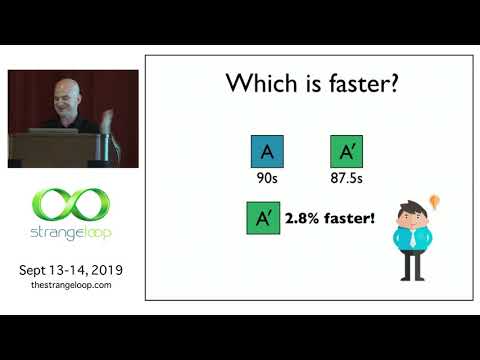
It is the standard recommendation for anyone puzzled by unexplained benchmark changes from tiny code edits, and for learning about causal profiling.
Emery Berger explains why performance is hard to measure and deliver on modern hardware, showing how code layout and alignment can swamp optimization effects. He presents Stabilizer for statistically sound evaluation and Coz, a causal profiler.
Performance Measurement, Stabilizer, and Causal Profiling
Strange Loop Conference · Talk
It is the standard recommendation for anyone puzzled by unexplained benchmark changes from tiny code edits, and for learning about causal profiling.

Why it's here
HN invokes it in nearly every content moderation and censorship thread as the most eloquent case for free speech.
Christopher Hitchens delivers a speech defending freedom of speech, including the right of audiences to hear offensive speakers and a take on the fire-in-a-crowded-theatre line. It is framed around the Charlie Hebdo attack.
Christopher Hitchens on Freedom of Speech
hitch archive · Talk
HN invokes it in nearly every content moderation and censorship thread as the most eloquent case for free speech.

Why it's here
A staple on must-watch lists, recommended as a starting point for Kay's thinking and for why software is often poor and ahistorical.
Alan Kay's 2009 UIUC talk arguing that computing is more a pop culture than a science and that ignoring history and fundamentals leads to inferior solutions. He touches on the history of interactive environments and what the web should have been.
Alan Kay: Normal Considered Harmful
powerfuloutlet · Talk
A staple on must-watch lists, recommended as a starting point for Kay's thinking and for why software is often poor and ahistorical.

Why it's here
Recommended often as a clear explanation of why the US system is built to be slow and why gridlock protects minorities.
Justice Antonin Scalia's opening statement at a 2011 Senate Judiciary hearing on the role of judges. He argues that the Constitution's separation of powers is what protects liberty, and that gridlock is by design.
Antonin Scalia on Separation of Powers and Gridlock
AmericanRhetoric.com · Talk
Recommended often as a clear explanation of why the US system is built to be slow and why gridlock protects minorities.

Why it's here
HN treats it as the standard starting point for Game Boy emulator writers and homebrew developers, with several calling it one of their favorite talks.
Michael Steil's 33c3 talk explains essentially everything about the Game Boy: CPU, video hardware, peripherals, and the tricks used by games and demos. It revives the era of counting clock cycles around hardware limits.
The Game Boy's Hardware Explained | Michael Steil
media.ccc.de · Talk
HN treats it as the standard starting point for Game Boy emulator writers and homebrew developers, with several calling it one of their favorite talks.